
The Indian online food delivery industry has grown from a niche urban convenience into a multi-billion-rupee digital ecosystem. At the heart of this transformation lies the intense competition between Swiggy and Zomato, two platforms that together control the overwhelming majority of the market. The debate around Swiggy and Zomato market share is no longer just about who delivers more food—it is about scale, profitability, technology, consumer behavior, and the future of on-demand services in India.
Over the last decade, both companies have evolved from food delivery startups into diversified consumer internet platforms. While Zomato currently leads in market share and profitability, Swiggy continues to challenge its dominance through operational excellence and aggressive expansion into new verticals.
This article takes an in-depth look at Swiggy and Zomato market share, examining how each company has grown, what drives their competitive positions, and what the future holds for India’s food delivery duopoly.
The Rise of India’s Food Delivery Duopoly
India’s food delivery market is unique due to its scale, price sensitivity, and fragmented restaurant ecosystem. While several players entered the space over the years, consolidation has resulted in a clear duopoly dominated by Swiggy and Zomato.
Together, Swiggy and Zomato market share exceeds 90%, making their strategies, financial performance, and growth trajectories critical indicators of the industry’s health.
Zomato’s Early Advantage
Founded in 2008, Zomato began as a restaurant discovery and listing platform. Its early entry allowed it to build strong brand recognition and a massive restaurant database. When Zomato pivoted aggressively into food delivery around 2015, it already had access to millions of users and restaurant partners—an advantage that continues to influence Swiggy and Zomato market share today.
Swiggy’s Logistics-First Approach
Swiggy, launched in 2014, entered the market later but with a sharp focus on logistics and delivery speed. Instead of acting as a marketplace, Swiggy invested heavily in building its own delivery fleet, routing systems, and customer experience. This approach helped Swiggy gain trust quickly and close the gap with Zomato during its early years.
Swiggy and Zomato Market Share: Current Landscape
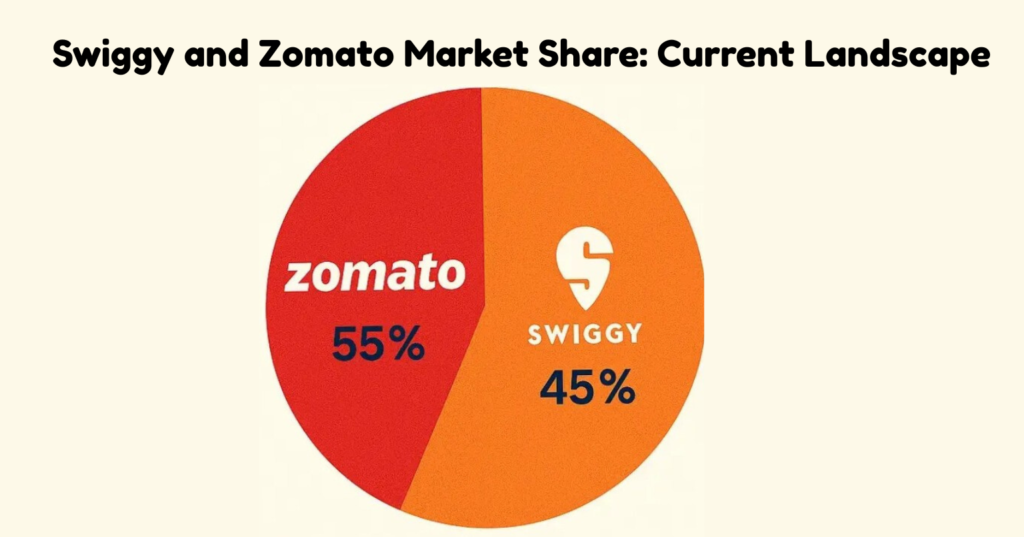
As of recent estimates, Zomato holds approximately 58% of India’s food delivery market, while Swiggy controls around 42%. While the gap is not overwhelming, it is significant enough to influence investor sentiment, restaurant partnerships, and long-term strategic planning.
Why Swiggy and Zomato Market Share Matters
Market share is more than a vanity metric. In platform-based businesses, it directly impacts:
- Bargaining power with restaurants
- Advertising revenue
- Delivery efficiency and network effects
- Brand dominance and customer recall
Zomato’s leadership in Swiggy and Zomato market share allows it to attract more restaurant listings, onboard users at lower marginal cost, and negotiate better commercial terms.
Growth Trends Shaping Swiggy and Zomato Market Share
Gross Order Value (GOV)
Gross Order Value is a critical measure of scale in food delivery. It reflects not only order volume but also consumer spending behavior.
Zomato has consistently reported faster growth in GOV compared to Swiggy. This suggests that Zomato users are ordering more frequently, spending more per order, or both—contributing directly to its growing share of the Swiggy and Zomato market share equation.
Swiggy’s GOV growth remains strong, but slightly slower, indicating that while it retains loyal users, Zomato is capturing incremental demand more effectively.
Monthly Transacting Users
The size of the active user base plays a central role in determining Swiggy and Zomato market share.
- Zomato has built a larger monthly transacting user base, exceeding 20 million users.
- Swiggy follows with approximately 14 million active users.
This gap has widened over time, reflecting Zomato’s success in expanding its reach across cities and demographics.
Revenue Performance and Market Share Correlation
Revenue growth closely mirrors Swiggy and Zomato market share trends.
Zomato generates higher revenue from operations due to:
- Higher order volumes
- Better monetization through advertising
- Additional revenue streams like dining services and quick commerce
Swiggy’s revenues have grown steadily, but at a lower absolute level, reflecting its smaller market share and continued investments in infrastructure-heavy businesses.
Profitability: The Defining Difference
One of the most significant developments in recent years has been Zomato achieving profitability, while Swiggy remains loss-making.
Zomato’s Profitability Advantage
Zomato’s ability to turn profitable strengthens its leadership in Swiggy and Zomato market share by:
- Allowing reinvestment without heavy external funding
- Improving investor confidence
- Supporting sustainable long-term growth
Swiggy’s Investment-Led Strategy
Swiggy continues to prioritize growth over profits, especially through investments in:
- Delivery infrastructure
- Quick commerce (Instamart)
- New consumer services
While this strategy may depress short-term margins, it could enhance Swiggy’s competitive position if these verticals mature successfully.
Quick Commerce and Its Impact on Swiggy and Zomato Market Share
The competition between Swiggy and Zomato has expanded beyond food delivery into quick commerce, where groceries and daily essentials are delivered within minutes.
Zomato’s quick commerce business has emerged as a market leader, reinforcing its overall dominance. Swiggy’s Instamart is growing rapidly but currently trails in scale.
Quick commerce does not directly affect food delivery market share yet, but it strengthens platform stickiness—indirectly influencing Swiggy and Zomato market share by increasing user engagement and app usage.
Customer Loyalty and Membership Ecosystems
Loyalty programs play a critical role in stabilizing Swiggy and Zomato market share.
- Zomato Gold integrates food delivery with dining benefits.
- Swiggy One offers bundled perks across food delivery, groceries, and other services.
These programs reduce churn, increase order frequency, and make it harder for users to switch platforms—reinforcing existing market share positions.
Geographic Expansion and Market Penetration
Zomato operates in more cities than Swiggy, giving it broader geographic reach. This wide presence has helped Zomato capture emerging demand in smaller cities, strengthening its position in the Swiggy and Zomato market share race.
Swiggy focuses more on:
- Deep penetration in metro and Tier-1 cities
- Higher service quality and faster delivery times
This difference reflects contrasting growth philosophies rather than a lack of ambition.
Challenges That Could Reshape Swiggy and Zomato Market Share
1. New Entrants and Alternative Models
Hyperlocal delivery platforms and open digital commerce networks are experimenting with lower commissions and different business models. While none pose an immediate threat, they could disrupt Swiggy and Zomato market share over time.
2. Regulatory and Labor Issues
Gig worker regulations, commission structures, and data policies could impact cost structures, affecting profitability and growth rates.
3. Consumer Price Sensitivity
Indian consumers are highly price-conscious. Any reduction in discounts or increase in delivery fees could shift order volumes and impact market share dynamics.
Future Outlook: Who Will Lead Swiggy and Zomato Market Share?
In the near term, Zomato is likely to maintain its leadership in Swiggy and Zomato market share due to:
- Larger user base
- Profitability
- Stronger monetization
However, Swiggy’s investments in logistics, quick commerce, and platform diversification could narrow the gap in the long run—especially if consumer demand shifts toward ultra-fast delivery and bundled services.
Market Share & Industry Analysis
Zomato leads food delivery with 58% market share in Q1; Blinkit tops quick commerce (Economic Times) — insights into how Zomato and Swiggy compare in food delivery and quick commerce market share. Zomato leads food delivery with 58% market share in Q1 (Economic Times)