
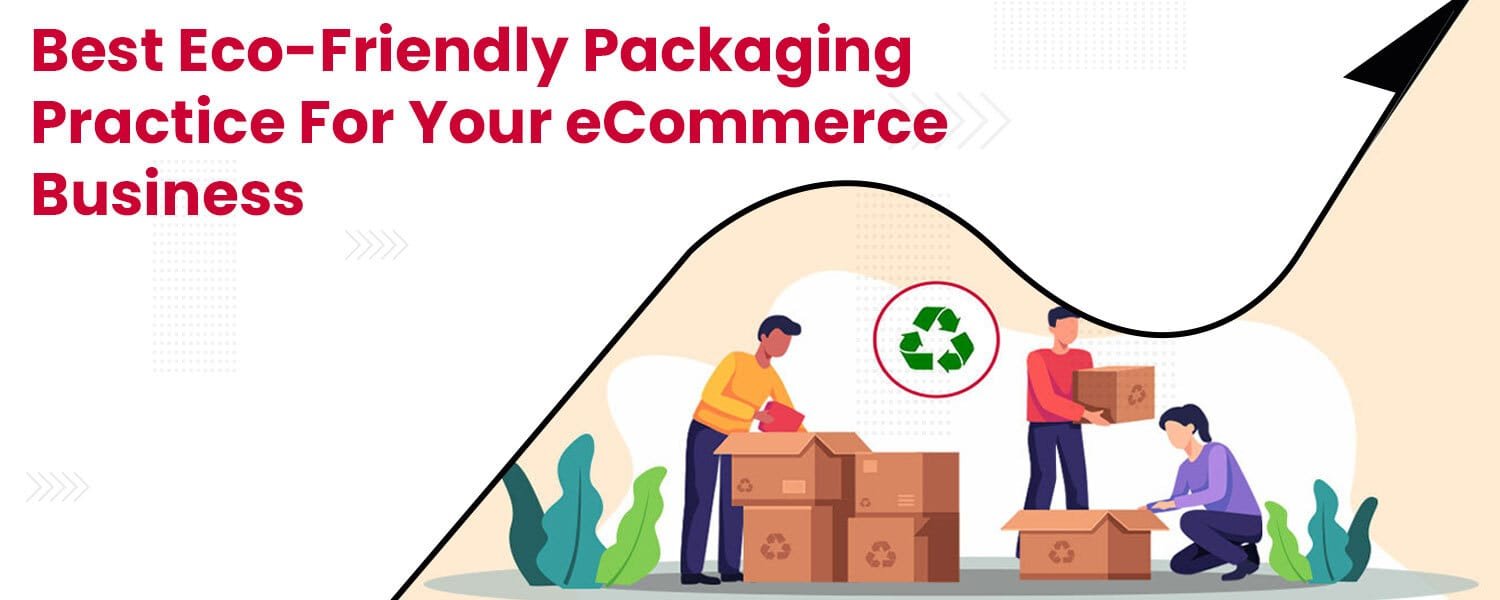
The global e-commerce industry has grown at an unprecedented pace over the last decade. With millions of online orders shipped daily, e-commerce has transformed consumer convenience, accessibility, and business scalability. However, this rapid growth has also created serious environmental challenges. Excessive packaging waste, carbon-heavy logistics, and unsustainable supply chains have raised concerns among governments, businesses, and consumers alike.
This is where sustainable e-commerce comes into focus. In 2026 and beyond, sustainability is no longer optional for online businesses—it is a competitive necessity. Consumers are increasingly choosing brands that adopt eco-friendly packaging, ethical sourcing, and environmentally responsible practices. As awareness grows, businesses that fail to adapt risk losing trust, visibility, and market share.
In this in-depth guide, we explore sustainable e-commerce, the importance of eco-friendly packaging, green logistics, ethical practices, and how online retailers can build environmentally responsible operations while remaining profitable.
Understanding Sustainable E-Commerce
Sustainable e-commerce refers to the practice of running online businesses in a way that minimizes environmental impact while supporting long-term economic and social responsibility. It focuses on reducing waste, conserving resources, lowering carbon emissions, and promoting ethical business practices across the entire e-commerce lifecycle.
Key pillars of sustainable e-commerce include:
- Eco-friendly packaging solutions
- Sustainable supply chains
- Green logistics and shipping
- Ethical sourcing and production
- Energy-efficient technology
- Waste reduction and recycling
As climate change concerns intensify, sustainability has shifted from being a niche concept to a mainstream expectation.
Why Sustainability Matters in E-Commerce
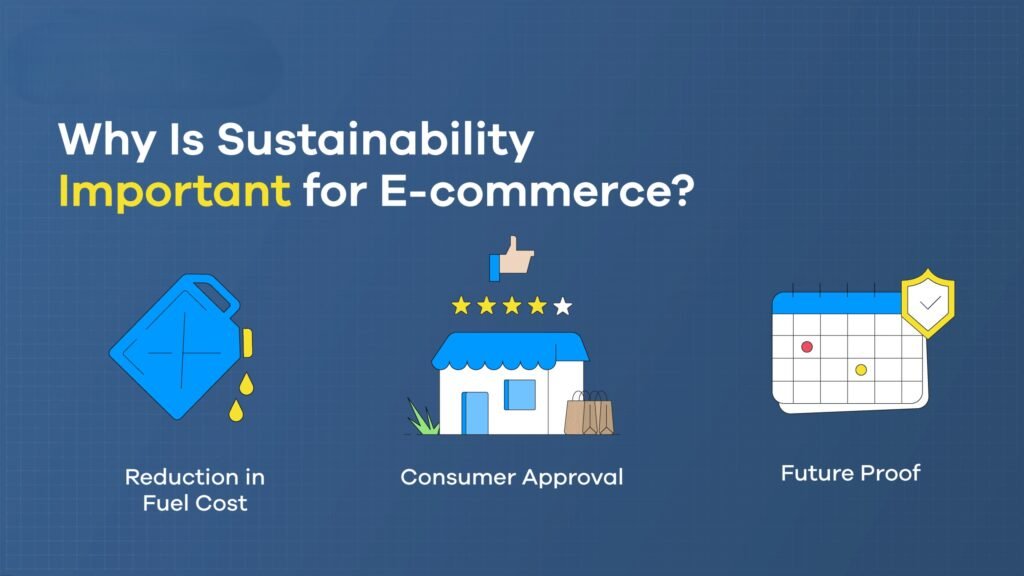
Environmental Impact of Traditional E-Commerce
Traditional e-commerce models contribute significantly to environmental damage due to:
- Excessive single-use plastic packaging
- Over-sized boxes and fillers
- High carbon emissions from last-mile delivery
- Product returns increasing transportation waste
According to environmental studies, packaging waste from e-commerce has increased dramatically, with plastics and non-recyclable materials causing long-term ecological harm.
Changing Consumer Behavior
Modern consumers are environmentally conscious. Studies show that:
- A majority of shoppers prefer eco-friendly brands
- Customers are willing to pay more for sustainable products
- Transparency in sustainability builds brand trust
This shift makes sustainable e-commerce practices a powerful growth strategy rather than just an ethical obligation.
Eco-Friendly Packaging: The Core of Sustainable E-Commerce
What Is Eco-Friendly Packaging?
Eco-friendly packaging uses materials and processes that reduce environmental harm. These materials are typically recyclable, biodegradable, compostable, or reusable.
Common eco-friendly packaging materials include:
- Recycled cardboard and paper
- Biodegradable mailers
- Compostable packaging made from cornstarch
- Reusable packaging solutions
- Plant-based inks and adhesives
Replacing plastic with sustainable alternatives significantly reduces landfill waste and ocean pollution.
Types of Sustainable Packaging Materials

1. Recyclable Packaging
Recyclable materials such as cardboard, paperboard, and aluminum can be reused multiple times. E-commerce brands are increasingly shifting to recycled corrugated boxes to minimize raw material usage.
Benefits:
- Reduces landfill waste
- Lower production emissions
- Cost-effective in bulk
2. Biodegradable Packaging
Biodegradable packaging decomposes naturally without releasing harmful toxins. Materials like kraft paper and molded pulp break down faster than plastics.
Benefits:
- Environmentally safe decomposition
- Lower long-term pollution
- Ideal for lightweight shipping
3. Compostable Packaging
Compostable materials break down into organic matter under composting conditions. These are often made from plant fibers, cornstarch, or sugarcane.
Benefits:
- Zero waste impact
- Enhances soil quality
- Highly attractive to eco-conscious customers
4. Reusable Packaging
Reusable packaging is a growing trend in sustainable e-commerce. Brands offer returnable packaging that customers can send back after delivery.
Benefits:
- Reduces packaging production
- Encourages circular economy
- Enhances brand loyalty
Reducing Packaging Waste in E-Commerce
Beyond switching materials, sustainable e-commerce focuses on reducing packaging waste altogether.
Right-Sized Packaging
Using packaging that fits the product eliminates excess fillers and oversized boxes. Smart packaging software helps businesses choose optimal box sizes automatically.
Minimalist Packaging Design
Minimal packaging reduces material usage and production costs. Many sustainable brands avoid unnecessary layers, inserts, and decorations.
Eliminating Plastic Fillers
Plastic bubble wrap and foam peanuts can be replaced with paper-based or compostable fillers.
Sustainable Supply Chain Practices
Sustainable e-commerce extends beyond packaging into the supply chain.
Ethical Sourcing
Ethical sourcing ensures raw materials are obtained responsibly, without harming ecosystems or exploiting labor. Sustainable brands partner with suppliers that follow fair trade and ethical standards.
Local Sourcing
Sourcing products locally reduces transportation emissions and supports regional economies.
Supplier Transparency
Businesses increasingly audit suppliers to ensure compliance with sustainability standards. Transparency builds trust with eco-conscious consumers.
Green Logistics and Sustainable Shipping
Carbon Emissions in E-Commerce Delivery
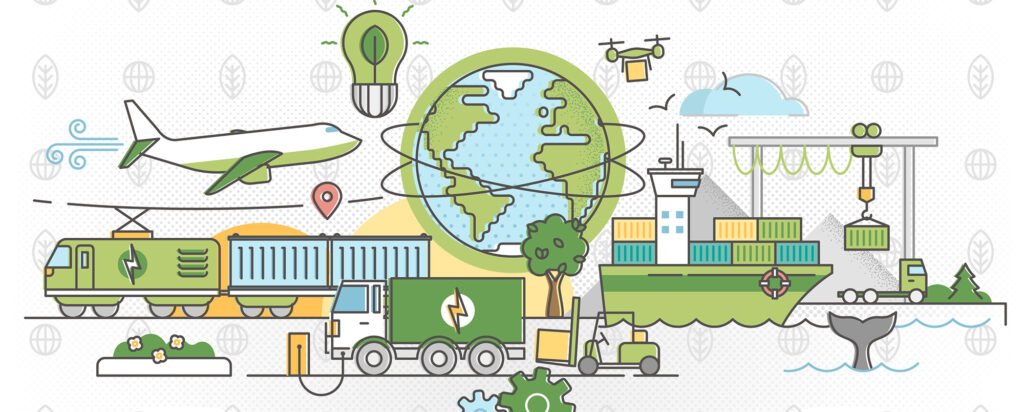
Last-mile delivery is one of the largest contributors to carbon emissions in e-commerce. Sustainable e-commerce aims to reduce this impact through smarter logistics.
Green Shipping Solutions
Key green shipping strategies include:
- Electric delivery vehicles
- Route optimization using AI
- Carbon-neutral shipping options
- Delivery consolidation
Many brands now offer customers the option to choose eco-friendly shipping at checkout.
Carbon Offsetting in E-Commerce
Carbon offsetting allows businesses to compensate for emissions by investing in environmental projects such as:
- Reforestation
- Renewable energy projects
- Carbon capture initiatives
Several e-commerce platforms integrate carbon offset programs directly into their logistics systems.
Sustainable Returns Management
Returns are a major sustainability challenge in e-commerce.
Reducing Returns Through Technology
- Accurate product descriptions
- Size guides and AR try-on tools
- High-quality images and videos
Reducing return rates directly lowers carbon emissions and packaging waste.
Eco-Friendly Return Packaging
Reusable return mailers and return-less refunds are emerging trends in sustainable e-commerce.
Technology’s Role in Sustainable E-Commerce
AI and Data Analytics
AI helps businesses optimize inventory, forecast demand, and reduce overproduction.
Cloud-Based Infrastructure
Cloud computing reduces energy consumption compared to traditional data centers.
Automation and Smart Warehousing
Automated warehouses reduce energy usage, improve accuracy, and minimize waste.
Sustainable Marketing in E-Commerce

Honest Sustainability Claims
Greenwashing can damage brand credibility. Transparency and verified certifications are essential.
Eco-Labels and Certifications
Popular sustainability certifications include:
- FSC-certified packaging
- Fair Trade
- Carbon Neutral Certified
Displaying these certifications builds trust and boosts conversions.
Consumer Education and Engagement
Educating customers about sustainable practices increases participation.
Examples include:
- Packaging disposal instructions
- Sustainability impact reports
- Incentives for eco-friendly choices
Consumers feel empowered when they contribute to environmental protection.
Benefits of Sustainable E-Commerce for Businesses
Adopting sustainable e-commerce practices offers long-term advantages:
- Stronger brand reputation
- Increased customer loyalty
- Regulatory compliance
- Cost savings over time
- Competitive differentiation
Sustainability aligns profitability with responsibility.
Challenges in Implementing Sustainable E-Commerce
Despite the benefits, businesses face challenges such as:
- Higher upfront costs
- Limited access to sustainable materials
- Complex supply chain transitions
- Measuring sustainability impact
However, technological advancements and growing supplier networks are making sustainability more accessible.
The Future of Sustainable E-Commerce
By 2026 and beyond, sustainable e-commerce will become the industry standard rather than a niche trend. Governments are introducing stricter regulations, consumers are demanding accountability, and investors are prioritizing ESG-focused businesses.
Future developments include:
- Fully circular packaging systems
- Net-zero logistics networks
- AI-driven sustainability optimization
- Mandatory sustainability reporting
Brands that invest early will gain a significant competitive advantage.