
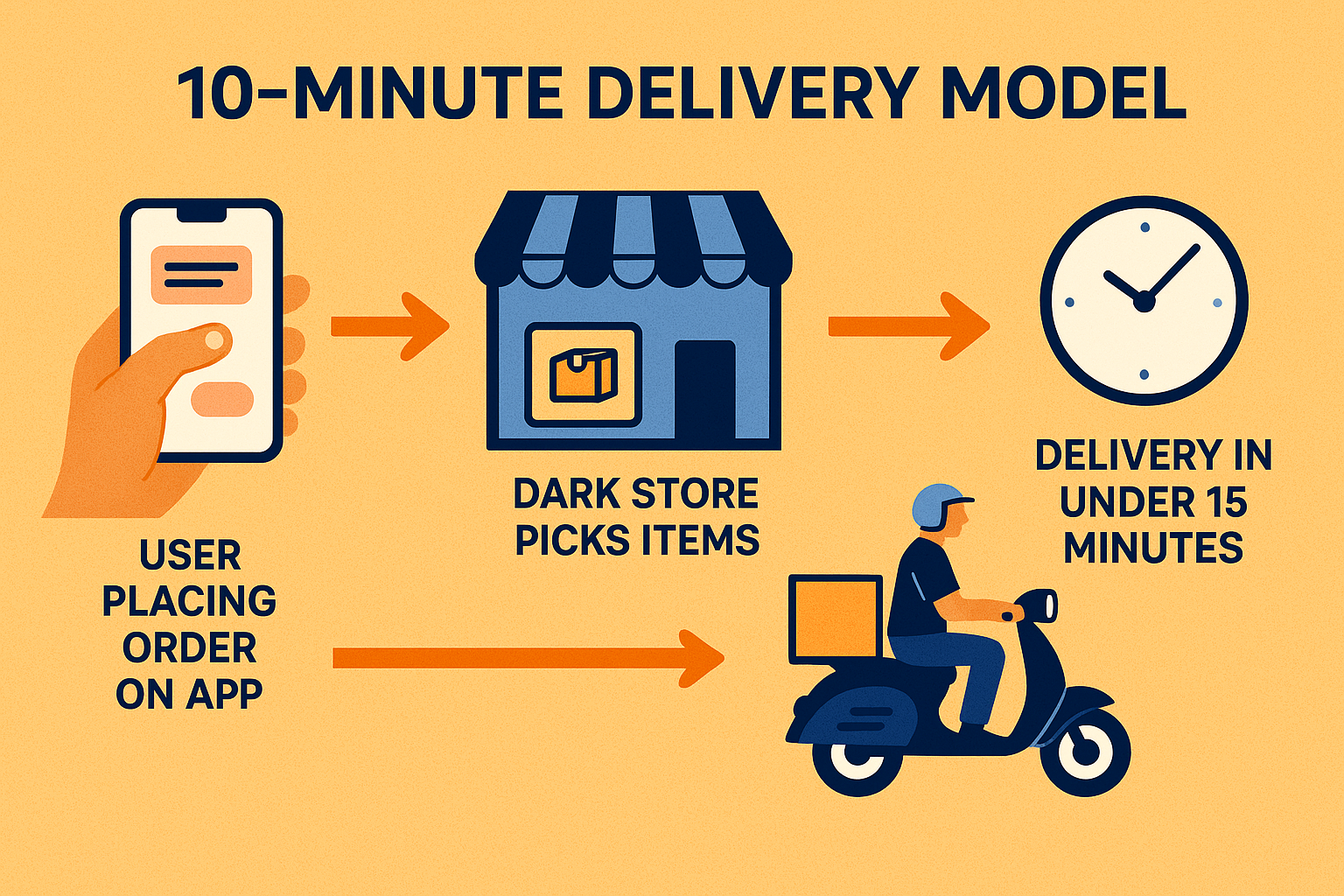
In just a few years, quick commerce—popularly known as Q-commerce—has transformed the way urban consumers shop. Quick Commerce Evolution. What started as a solution for last-minute grocery needs has rapidly evolved into a powerful retail model delivering everything from electronics to beauty products in under 10 or 20 minutes. Quick Commerce Evolution. Today, companies such as Blinkit and Zepto are leading this shift, expanding their product catalogs far beyond fruits, vegetables, and milk.
The most remarkable change? Ultra-fast delivery is no longer perceived as a luxury or premium add-on. For many consumers, it has become the default expectation.
This article explores how 10-minute delivery expanded beyond groceries, what’s driving this evolution, the challenges companies face, and what the future of quick commerce might look like.
The Origins of Quick Commerce
Quick commerce emerged as a hyper-localized version of e-commerce. Traditional online shopping platforms focused on next-day or two-day deliveries. Quick Commerce Evolution. While convenient, they couldn’t solve immediate needs—like running out of cooking oil while preparing dinner or needing medicine late at night.
The pandemic accelerated demand for contactless, fast deliveries. Startups capitalized on this by building “dark stores”—small fulfillment centers located within neighborhoods. Quick Commerce Evolution. Instead of shipping goods from distant warehouses, products were stored close to customers, enabling delivery within minutes.
Initially, groceries were the core focus because:
- They are frequently purchased.
- They are time-sensitive.
- Consumers often forget items.
- Margins, while slim, could be sustained through volume.
But once logistics systems matured, companies realized the same infrastructure could support much more.
The Big Shift: Beyond Groceries
The new phase of Q-commerce expansion is marked by category diversification. Platforms are no longer “grocery apps.” They are becoming instant lifestyle marketplaces.
Here’s how different sectors are being reshaped.
1. Electronics: Instant Gadgets at Your Doorstep
Imagine needing a phone charger before a meeting or headphones before a flight. Instead of visiting a store or waiting a day for delivery, consumers can now get these items in 10–20 minutes.
Quick commerce platforms are now stocking:
- Phone chargers and cables
- Power banks
- Earphones and headphones
- Bluetooth speakers
- Smart accessories
- Basic home appliances
This shift reflects changing consumer behavior. Electronics purchases are no longer limited to planned upgrades. Many are urgent, situational buys.
For Q-commerce players, electronics offer:
- Higher margins than groceries
- Strong impulse purchase potential
- Brand partnerships with tech manufacturers
This category expansion signals a clear intent: quick commerce is becoming a convenience ecosystem.
2. Beauty and Personal Care: Speed Meets Self-Care
Beauty products have become one of the fastest-growing segments in Q-commerce.
Consumers now order:
- Skincare products
- Makeup essentials
- Haircare items
- Grooming tools
- Fragrances
Why does this work so well?
Because many beauty purchases are urgent. A last-minute party invite, a sudden office event, or running out of foundation before a wedding function—these moments drive demand for instant delivery.
For companies like Blinkit and Zepto, beauty products offer:
- Attractive profit margins
- Brand collaborations
- Recurring purchase cycles
- Upselling opportunities
The combination of urgency and premium pricing makes beauty a powerful vertical in quick commerce.
3. Fashion Essentials: Instant Style Fix
Quick commerce isn’t trying to replace full-scale fashion e-commerce. Instead, it focuses on essentials and urgent needs.
These include:
- Basic T-shirts
- Innerwear
- Socks
- Leggings
- Rainwear
- Slippers
- Seasonal accessories
Imagine tearing a shirt before an event or realizing you forgot socks before a meeting. Quick commerce steps in to solve these small but important problems.
This category works because it doesn’t require extensive browsing. Customers know what they want and need it immediately.
4. Emergency Medicine: Critical Convenience
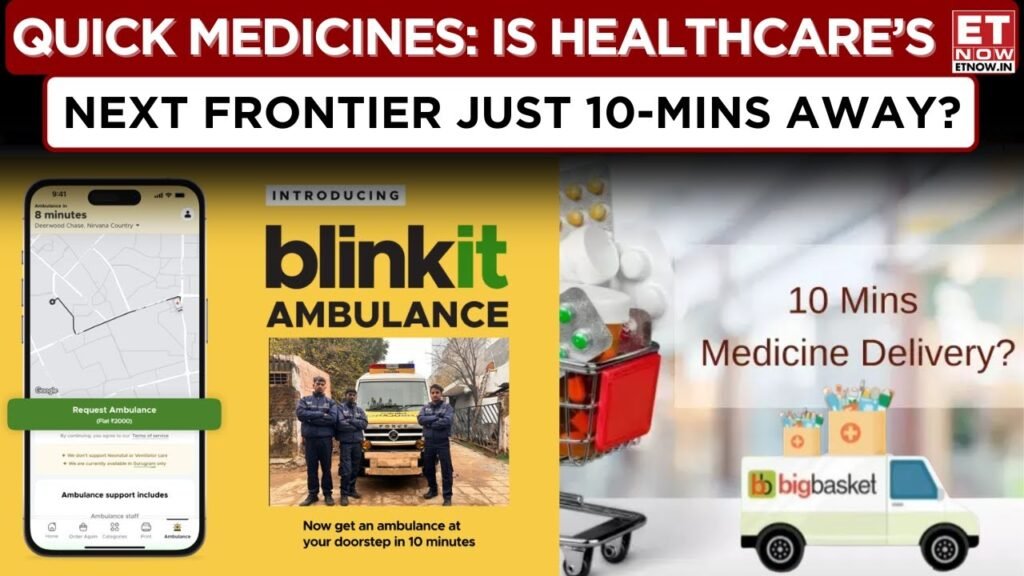
One of the most impactful expansions in Q-commerce is emergency medicine.
While regulations vary, platforms increasingly stock:
- Over-the-counter medicines
- First-aid kits
- Pain relievers
- Fever reducers
- Cold and flu medication
- Sanitary products
- Baby care essentials
In urgent situations, waiting hours for delivery is not an option. Quick commerce fills this gap.
This move also builds trust. When a platform reliably delivers essentials during emergencies, it becomes deeply embedded in daily life.
Why Consumers Now Expect Speed by Default
The biggest transformation isn’t technological—it’s psychological.
Consumers today expect:
- Instant gratification
- Real-time tracking
- Seamless checkout
- Transparent pricing
- 24/7 availability
The rise of food delivery apps conditioned people to expect speed. Quick commerce took it further.
What was once marketed as a “10-minute delivery” innovation is now simply expected. Customers don’t see it as a bonus feature—they assume it.
In fact, if delivery takes a day, it feels slow.
The Infrastructure Behind 10-Minute Delivery
Delivering within 10–20 minutes requires:
1. Dark Stores
Small warehouses located within 2–3 km of residential clusters.
2. Hyperlocal Inventory Management
AI-powered systems track demand patterns and restock frequently purchased items.
3. Route Optimization
Algorithms map the fastest delivery routes in real time.
4. Dedicated Delivery Fleet
Riders stationed close to demand hotspots.
5. Data-Driven Stock Selection
Companies stock high-demand SKUs instead of offering massive catalogs.
This lean inventory model is what makes speed possible.
Business Strategy: How Q-Commerce Makes Money
Expanding beyond groceries isn’t just about convenience—it’s about sustainability.
Groceries often operate on thin margins. Electronics, beauty, and fashion provide better profitability.
Revenue streams include:
- Product margins
- Delivery fees (sometimes dynamic)
- Platform advertising
- Brand placements
- Subscription programs
- Cross-selling and impulse purchases
By diversifying categories, companies increase average order value (AOV) and improve margins.
Competition Intensifies
The quick commerce market has become highly competitive. While Blinkit and Zepto are key players, others are also entering or expanding in the space.
Competition pushes companies to:
- Expand categories faster
- Improve delivery times
- Offer discounts
- Introduce loyalty programs
But aggressive expansion also brings financial pressure.
The Challenges of Quick Commerce Expansion
Despite rapid growth, Q-commerce faces several hurdles.
1. Profitability Pressure
Maintaining dark stores and delivery fleets is expensive.
2. Inventory Risk
Electronics and beauty products have shelf-life or obsolescence risks.
3. Regulatory Issues
Medicine and healthcare deliveries require compliance.
4. Rider Welfare Concerns
Ensuring safe working conditions and realistic delivery timelines is essential.
5. Urban Saturation
Growth is concentrated in metro cities. Expansion into smaller cities is complex.
Balancing speed with sustainability remains the biggest challenge.
The Impact on Traditional Retail
Quick commerce is changing local retail dynamics.
Kirana stores and neighborhood pharmacies are facing:
- Increased competition
- Demand for digital presence
- Pressure to improve delivery services
Some retailers are adapting by partnering with Q-commerce platforms, turning from competitors into suppliers.
Consumer Behavior: The Era of Micro-Purchases
Another emerging trend is “micro-shopping.”
Instead of placing large weekly orders, consumers now:
- Order smaller quantities
- Order more frequently
- Make spontaneous purchases
This behavior increases platform engagement and order frequency, benefiting Q-commerce companies.
Technology as the Backbone
Advanced technologies power this ecosystem:
- AI demand forecasting
- Real-time data analytics
- Machine learning for inventory optimization
- Predictive purchasing behavior models
As technology improves, delivery windows may shrink further, and category depth will expand.
The Future of Quick Commerce
What lies ahead?
1. Deeper Category Expansion
Expect categories like:
- Small home decor
- Pet supplies
- DIY tools
- Office supplies
- Health devices
2. Subscription Models
Monthly plans for free deliveries and exclusive deals.
3. AI-Powered Recommendations
Apps predicting what you’ll need before you order.
4. Tier-2 and Tier-3 City Expansion
As infrastructure improves, smaller cities may become the next growth frontier.
5. Sustainability Focus
Electric delivery vehicles and optimized packaging may become standard.
Is 10-Minute Delivery Sustainable?
The key question remains: can 10-minute delivery remain viable long-term?
The answer depends on:
- Order density
- Urban infrastructure
- Cost control
- Strategic product mix
- Customer retention
While not every location may sustain ultra-fast delivery, high-density urban areas likely will.
A Shift in Consumer Mindset
Perhaps the most significant outcome of Q-commerce expansion is a shift in how people think about time.
Waiting is no longer acceptable.
Consumers now view:
- Speed as standard
- Convenience as essential
- Availability as guaranteed
This psychological shift ensures that even if delivery windows extend slightly, fast commerce as a concept is here to stay.
Quick commerce explained by Forbes India (industry overview) – Offers context on the quick commerce market and how it’s evolving across categories.