
In today’s fast-paced ecommerce landscape, understanding your audience is no longer optional — it’s essential. Many businesses fail not because their products are inferior, but because they attempt to appeal to everyone rather than focusing on the people most likely to buy. This is where how to find your ideal customer using target market analysis becomes crucial. By uncovering who your ideal customers are, what motivates them, and how they make purchasing decisions, businesses can make smarter choices about product development, marketing, and sales strategies.
How to find your ideal customer using target market analysis is a structured process that helps businesses pinpoint the audiences most likely to convert, ensuring every effort and investment is directed where it matters most. This approach not only optimizes marketing spend but also informs product decisions, messaging, and overall business strategy.
In this article, we’ll explore everything you need to know about how to find your ideal customer using target market analysis, including defining your target audience, collecting and analyzing data, leveraging AI tools, and building actionable customer profiles.
What Is Target Market Analysis?

Target market analysis is the practice of identifying and understanding the specific group of customers most likely to purchase your product or service. Learning how to find your ideal customer using target market analysis allows businesses to focus on the people who matter most, rather than casting a wide net and hoping for success. Companies divide the overall market into segments based on shared characteristics, which can be demographic (age, income, gender), geographic (region, climate), psychographic (values, lifestyle, personality), or behavioral (buying habits, loyalty, usage patterns).
The ultimate goal of how to find your ideal customer using target market analysis is to create detailed customer profiles, often called buyer personas. These profiles combine quantitative data — like age, income, and location — with qualitative insights, including motivations, interests, and pain points. Understanding these factors helps businesses design products, marketing campaigns, and sales strategies that align perfectly with customer needs.
Effective target market analysis enables businesses to:
- Identify the most and least profitable market segments
- Develop buyer personas for precision marketing
- Spot gaps in the market and discover unmet needs
- Assess the viability of new products or services
- Inform strategic business planning
Target Market vs. Target Audience
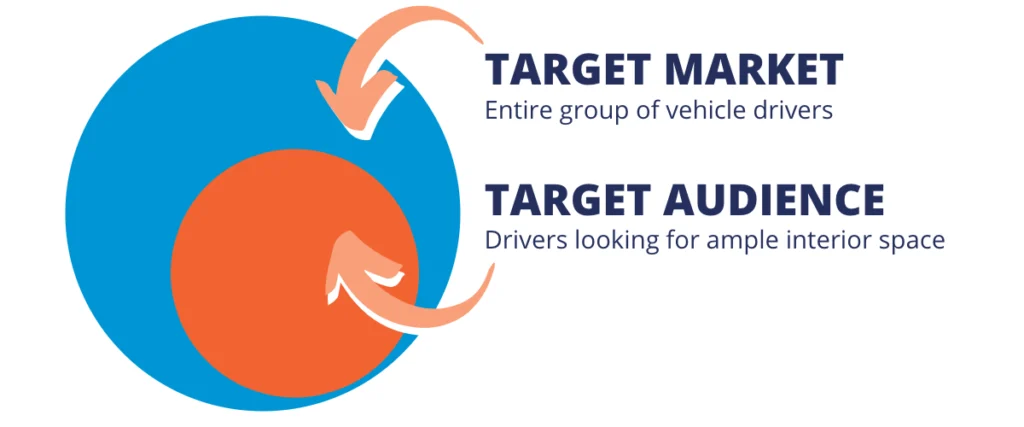
It’s important to distinguish between a target market and a target audience when learning how to find your ideal customer using target market analysis. Your target market represents the broad group of people your business aims to serve — the “who” of your business. This group could include characteristics like age, income, lifestyle, or geographic location.
In contrast, your target audience is a narrower slice within your target market — the specific people you want to reach with a particular marketing message or campaign. For example, your target market might be “women aged 25–45 in urban areas,” while your target audience for a social media ad could be “millennial women aged 28–34 who practice yoga and care about sustainable products.”
By understanding both the broad and specific segments of your audience, businesses can effectively apply how to find your ideal customer using target market analysis to craft messaging that resonates deeply while still targeting the right people.
Why Target Market Analysis Matters
Target market analysis is a critical tool for businesses for several reasons:
- Focus Resources Effectively: By identifying the customers most likely to convert, businesses can allocate marketing budgets, advertising efforts, and resources more efficiently.
- Understand Customer Needs: Target market analysis uncovers what problems your customers want to solve, how they currently approach those problems, and which features or services they value most.
- Identify Opportunities: Research often reveals underserved market segments or gaps in the market where your business can differentiate itself.
- Reduce Risk: Launching a new product or service without understanding your audience can lead to wasted resources and low conversion rates. Target market analysis serves as a reality check before major investments.
- Guide Marketing and Messaging: Knowing your audience’s preferences, values, and behaviors helps craft messaging that resonates, choose the right channels, and optimize advertising campaigns.
Step 1: Identify Your Total Addressable Market (TAM)

Before diving into detailed analysis, start by defining your total addressable market (TAM) — the maximum potential audience for your product or service. This step is essential in how to find your ideal customer using target market analysis, as it establishes the high-level scope of your market and provides a foundation for segmentation.
Begin by gathering insights from:
- Web analytics tools: Understand where your visitors come from, their demographics, and their behavior on your site.
- Social media insights: Learn what types of people engage with your brand online.
- Government data sources: In the U.S., the Census Bureau provides detailed demographic data at state, county, and zip-code levels.
Once you have a high-level understanding of your total addressable market, you can move on to segmenting it into the most promising audiences for targeted marketing efforts.
Step 2: Collect Quantitative and Qualitative Data

Target market analysis relies on two types of data:
- Quantitative data: Objective facts and figures such as age, income, location, purchase history, and transaction volume.
- Qualitative data: Insights into customer sentiment, motivations, preferences, and behaviors — often gathered directly from the customer.
Understanding how to find your ideal customer using target market analysis requires a combination of primary and secondary research:
Primary Research Methods
- Surveys: Online surveys, social media polls, and email questionnaires provide quick feedback. Use open-ended questions to uncover deeper insights beyond multiple-choice answers.
- Interviews: Conduct semi-structured interviews with customers or potential buyers. Ask about their pain points, buying decisions, and product preferences to gain richer context.
- Focus Groups: Engage a small group of customers to discuss their experiences, preferences, and opinions about your product or market. This can reveal nuanced insights not apparent in surveys alone.
- Product Trials: Offering a trial version of your product allows you to observe how users interact with it and collect valuable feedback.
- Customer Reviews and Testimonials: Analyze existing reviews to identify patterns in satisfaction, complaints, or desired features.
- Past Transactions: Your sales history provides quantitative data on repeat purchases, popular products, and customer demographics.
- Competitor Analysis: Study your competitors’ offerings, marketing strategies, and customer engagement to identify gaps and opportunities.
Secondary Research Sources
Secondary data complements your primary research and helps validate insights. Sources include:
- Industry reports from firms like McKinsey, Deloitte, Accenture, and EY
- Google Trends for identifying emerging interests
- Census and demographic data for population insights
- SEO and analytics tools like SEMrush, Similarweb, or Quantcast
By combining these approaches, businesses can gain a clear understanding of how to find their ideal customer using target market analysis, uncovering actionable insights to guide marketing, product development, and sales strategies.
Step 3: Leverage AI for Target Market Analysis

Artificial intelligence has transformed the way businesses conduct market research. AI tools can quickly analyze large amounts of data, uncover patterns in customer behavior, and generate actionable insights.
How AI Helps
- Data aggregation: AI collects and organizes both internal (customer reviews, sales records) and external (social media chatter, competitor updates) data.
- Sentiment analysis: AI tools can scan reviews, comments, and survey responses to identify positive, negative, or unmet customer needs.
- Segmentation and personalization: AI helps refine buyer personas, forecast demand, and optimize marketing messages for specific segments.
- Efficiency: Tasks that once took weeks — analyzing competitor sites or customer feedback — can now be completed in minutes.
Training AI
To maximize AI’s potential, businesses should provide context and train it on specific datasets:
- Share product catalogs, customer personas, past research, competitor profiles, and reviews.
- Teach AI to categorize themes such as pain points, purchase motivations, and objections.
- Fine-tune AI models on your brand’s tone of voice and messaging style.
- Incorporate external signals, like Google Trends, social media patterns, and competitor updates.
By creating an internal AI research playbook with standardized prompts, data sources, and analysis formats, businesses can ensure consistent, actionable insights.
Step 4: Build Customer Profiles and Segments
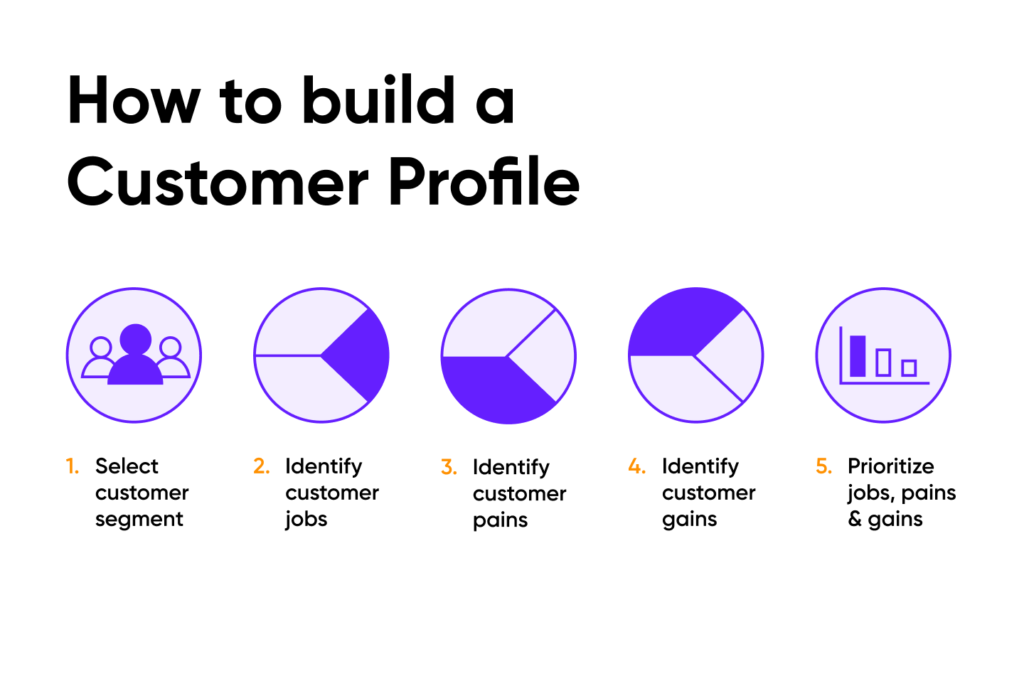
Once data is collected, it’s time to create detailed customer profiles — comprehensive summaries of your ideal customers that include both demographics and psychographics.
Key Demographic Insights
- Age
- Gender
- Location
- Income
- Education level
- Occupation
- Relationship status
Key Psychographic Insights
- Interests and hobbies
- Values and attitudes
- Lifestyle preferences
- Buying behavior
- Brand affinities
These profiles help determine the most effective marketing channels, product positioning, pricing strategies, and messaging approaches.
Step 5: Conduct Competitive Analysis

Studying competitors offers valuable insights into market trends, audience behavior, and potential gaps in the market. Consider:
- Who are your main competitors targeting?
- How do they position their products?
- What pricing strategies do they use?
- Where do they advertise, and which channels generate the most engagement?
- What are their strengths and weaknesses relative to your brand?
Competitive analysis enables businesses to identify underserved segments, differentiate their offerings, and enhance their value proposition.
Step 6: Analyze and Interpret Your Findings

After collecting a mix of qualitative and quantitative data, review it in the context of your business goals. Key questions to address include:
- Is there sufficient demand for your product?
- Can your target market afford your offering?
- How frequently would they purchase?
- Are your customers accessible through your chosen channels?
- What gaps or opportunities exist in the market?
Organizing insights into templates, charts, and reports helps track findings and informs future decision-making.
Step 7: Apply Insights to Marketing and Strategy

With a thorough understanding of your target market, you can tailor marketing campaigns, product development, and sales strategies to match customer needs:
- Optimize messaging and product features for the segments that matter most.
- Choose marketing channels that align with customer behavior.
- Develop pricing strategies and promotions suited to each segment.
- Create personalized experiences that increase conversion and customer loyalty.
By focusing on the most valuable customers, businesses can maximize ROI, improve engagement, and foster long-term growth.
Free and Paid Tools for Target Market Analysis
There are many tools available to simplify target market research:
| Tool | Key Features | Pricing |
|---|---|---|
| Google Analytics | Track user behavior, discover audiences | Free |
| SurveyMonkey | Gather primary insights via surveys | Free limited, premium starts at $39/mo |
| SEMrush | Competitor analysis, SEO insights | Starts at $199/mo |
| Qualaroo | Sentiment analysis, feedback collection | Free limited, premium starts at $19.99/mo |
| Similarweb | Traffic analysis, benchmarking | Free limited, premium starts at $125/mo |
| Google Trends | Trend identification, market research | Free |
| Pew Research Center | Social and demographic research | Free |
| Statista | Industry stats and forecasts | Free limited, premium from $199/mo |
| BuzzSumo | Competitor mentions, content monitoring | Starts at $199/mo |
| Answer The Public | Keyword research, trend analysis | Starts at $13/mo |
These tools allow businesses to complement manual research, gather comprehensive insights, and validate assumptions efficiently.