
In a country where street-side shops, home-based sellers, and informal traders dominate everyday commerce, India’s e-commerce revolution was never going to look like Silicon Valley’s. How Meesho Changed Small-Business E-Commerce in India While global giants such as Amazon and Walmart-backed Flipkart focused on urban India’s appetite for smartphones, electronics, and branded goods, a quieter, more grassroots transformation was brewing elsewhere.
That transformation is Meesho.
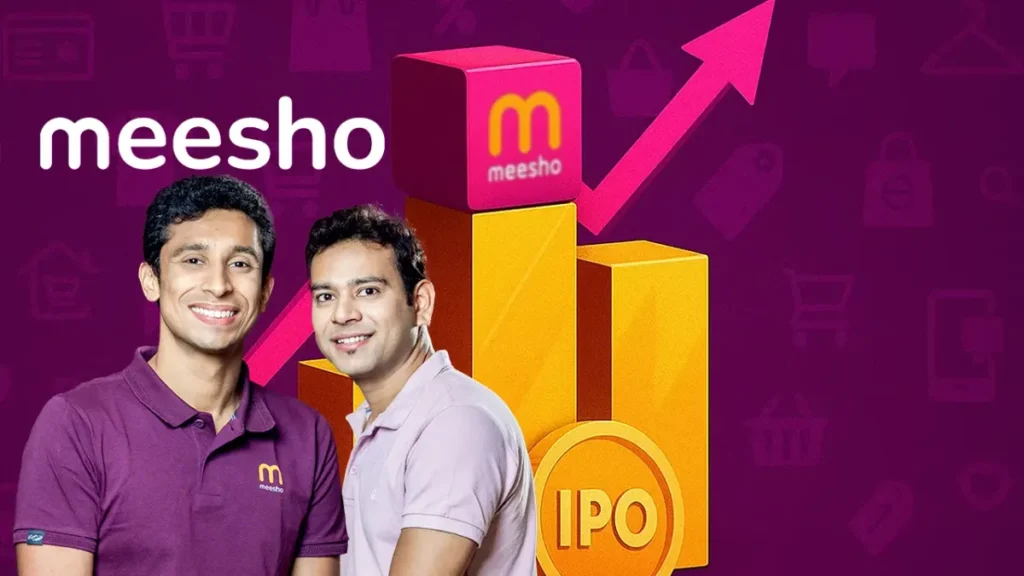
What began as an experiment to digitise India’s unstructured retail economy has now evolved into one of the country’s most formidable e-commerce success stories. Operated by Bengaluru-based Fashnear Technologies Private Limited, How Meesho Changed Small-Business E-Commerce in India Meesho is preparing for a landmark initial public offering (IPO) that could raise nearly ₹4,250 crore, potentially valuing the company at close to US$10 billion.
But Meesho’s journey to scale has little to do with flashy gadgets or premium brands. Instead, it is rooted in small towns, modest aspirations, and millions of micro-entrepreneurs who were largely invisible to mainstream e-commerce platforms.
A Different Starting Point

When Vidit Aatrey and Sanjeev Barnwal were brainstorming business ideas in 2014, e-commerce was already heating up in India. Amazon and Flipkart were spending aggressively to capture urban consumers, How Meesho Changed Small-Business E-Commerce in India building logistics-heavy operations around high-ticket items.
Aatrey and Barnwal saw something else.
Nearly 85 per cent of India’s retail economy was—and still is—unstructured. Small manufacturers, home-based artisans, women entrepreneurs, and neighbourhood sellers made up the backbone of commerce across India’s vast hinterland. These businesses lacked capital, technology, and market access, but not ambition.
Rather than competing head-on with established e-commerce giants, How Meesho Changed Small-Business E-Commerce in India the founders chose to build a platform that would bring this fragmented economy online.
Meesho was officially founded in 2015 with a simple but radical idea: empower small sellers to reach customers across India using tools they already understood—social media and messaging platforms.
Social Commerce Before It Had a Name
Long before “social commerce” became a buzzword, Meesho was quietly enabling it.
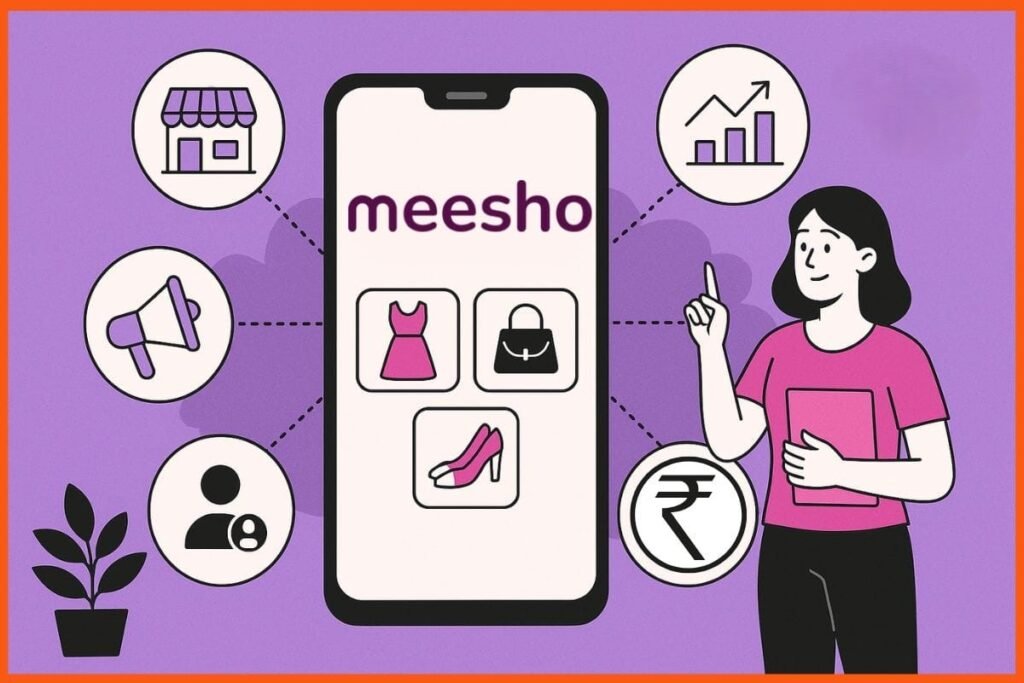
The platform allowed sellers to share product catalogues directly on WhatsApp, Facebook, and Instagram—platforms already embedded in daily life across small towns and rural India. How Meesho Changed Small-Business E-Commerce in India Orders, payments, and logistics were handled by Meesho’s backend, removing complexity for sellers who had never operated formal businesses before.
Crucially, Meesho didn’t require sellers to hold inventory upfront. Many entrepreneurs only manufactured or procured goods after receiving an order, significantly lowering entry barriers.
“We don’t sell smartphones or televisions. We don’t sell brands,” Aatrey explained in a 2023 interaction. “We don’t serve the top 20 or 30 million people in India. We serve everyone beyond.”
This focus reshaped Meesho’s identity. The platform specialised in affordable, unbranded products—often priced below ₹500—ranging from apparel and home décor to kitchenware and accessories.
Why Small Towns Became Meesho’s Power Base

India’s tier-2, tier-3, and tier-4 cities represent a massive but often misunderstood consumer base. These markets are price-sensitive, multilingual, and technologically constrained—but deeply aspirational.
Meesho designed its platform around these realities.
The app was deliberately built to be lightweight, making it easy to download and use on low-end smartphones with limited storage. The interface was simplified to accommodate first-time internet users and older entrepreneurs unfamiliar with complex digital tools. Regional language support helped the platform reach users across thousands of pin codes.
This user-first approach allowed Meesho to expand rapidly where Amazon and Flipkart had limited penetration.
According to Vaitheeswaran K, co-founder of Fabmall and author of Failing to Succeed, Meesho succeeded because it identified a sharp niche. “They positioned themselves as the D-Mart of digital commerce,” he says, referring to the value-driven retail chain. “That focus helped them scale without burning capital in head-on competition.”
Women Entrepreneurs at the Core
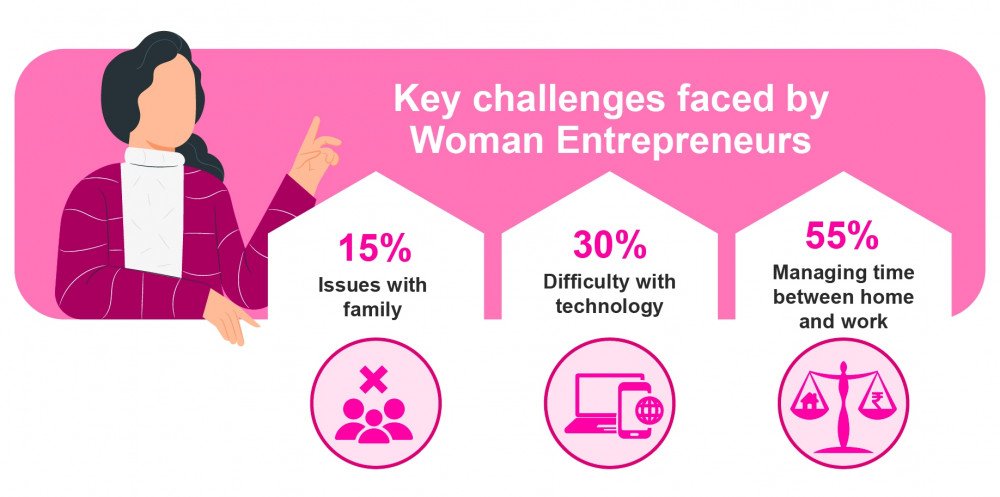
One of Meesho’s most transformative contributions has been its role in enabling women-led businesses.
Across India, millions of women possess skills in tailoring, crafting, and home-based manufacturing but lack the infrastructure to run physical stores. Meesho’s reseller model allowed them to operate businesses with little upfront investment.
The platform remained flexible on commissions, often charging none during early stages, and handled logistics and payments—historically the most challenging aspects of commerce for small sellers.
Arjun Malhotra, general partner at Good Capital and an early investor in Meesho, believes this was a critical differentiator. “Meesho understood India’s social commerce chaos and built the backend to make it work,” he says.
Instead of replacing existing selling behaviour, Meesho enhanced it—formalising informal trade without stripping away its flexibility.
Infrastructure Over Innovation Hype
While many startups chased cutting-edge technologies, Meesho focused on solving foundational problems:
- Inconsistent inventory tracking
- Fragmented supplier networks
- Manual order management
- Complex digital payments
- Lack of working capital
By addressing these pain points systematically, Meesho created scalable infrastructure for micro-entrepreneurs who had never interacted with formal supply chains before.
This approach created what Malhotra calls “market whitespace”—a segment large enough to build scale, but ignored by incumbents.
Competing Without Competing

Despite growing into a serious rival to Flipkart and Amazon, Meesho insists it does not compete with them in the traditional sense.
Flipkart remains India’s e-commerce market leader, while Amazon dominates premium categories. Meesho operates in a parallel universe—one driven by affordability, accessibility, and local manufacturing.
Yet the numbers reveal Meesho’s growing clout.
In FY24, the company reported revenues of ₹7,615 crore and generated free cash flow of ₹197 crore. It processed 1.3 billion orders during the year, a scale comparable to established giants.
Today, Meesho hosts over 110 million daily active listings and serves nearly 187 million consumers across more than 15,000 pin codes.
The Meta Advantage

One of Meesho’s strategic advantages lies in its deep integration with Meta-owned platforms. Facebook’s early investment provided both capital and distribution leverage.
Since sellers already relied heavily on WhatsApp and Instagram to communicate with customers, Meesho’s model aligned naturally with existing digital habits. Product sharing became frictionless, while discovery was powered organically through social networks rather than expensive ad campaigns.
This significantly reduced customer acquisition costs—one of the biggest challenges in Indian e-commerce.
Stories That Define Impact
Meesho’s impact is best understood through individual success stories.
Aatrey often recounts the journey of a former factory worker from Panipat, Haryana. Initially earning less than ₹7,000 a month stitching garments by hand, the entrepreneur began listing products on Meesho without any capital buffer.
He produced goods only after receiving orders. Over seven years, his small operation grew into a thriving enterprise housed in a three-storey building, employing over 100 workers and generating annual sales exceeding ₹1 crore.
Such stories are not anomalies. They reflect a broader shift in how digital platforms can democratise economic opportunity.
India’s Retail Opportunity Is Still Emerging
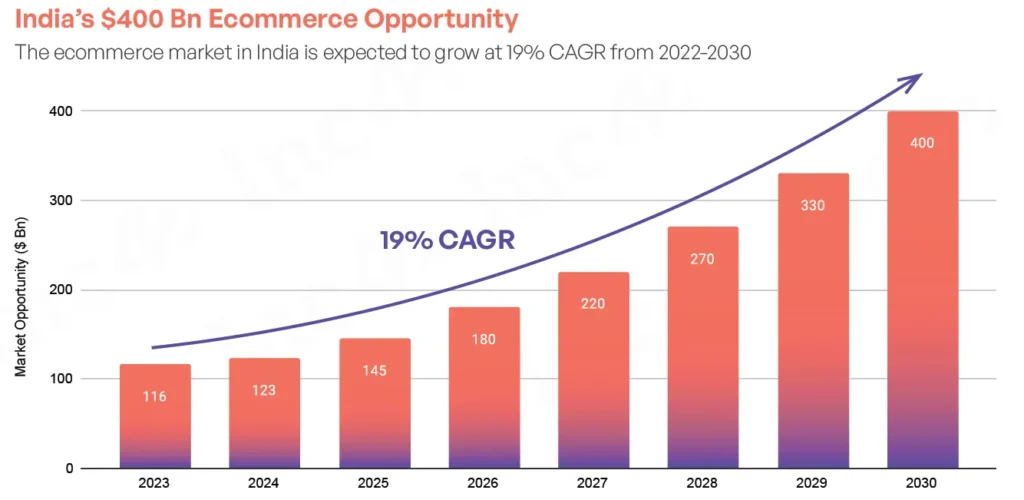
India’s retail market is estimated to be worth over US$1.2 trillion. Yet online retail penetration remains at just around 8 per cent—far lower than Europe’s 15 per cent or the US’s 20 per cent.
This gap suggests enormous headroom for growth.
“Digital commerce growth in India is still ahead of us,” says Vaitheeswaran. “Strong businesses that understand local realities can experience explosive growth.”
Meesho’s model positions it squarely within this opportunity—one driven not by premium consumption, but by mass participation.
From Startup to Institution

Meesho’s upcoming IPO represents more than a fundraising milestone. It marks a transition—from startup experimentation to institutional credibility.
The company has restructured its board and merged its Delaware-based entity, Meesho Inc., with its Indian operations, signalling long-term commitment to domestic markets.
According to Malhotra, Meesho’s public listing is now a strategic choice rather than a necessity. “They’ve demonstrated sustainable unit economics and deep market penetration beyond metros,” he says. “An IPO would cement their position as the definitive social commerce success story.”
A Blueprint for Emerging Markets
Meesho’s journey offers lessons that extend beyond India.
In many emerging economies, informal commerce dominates, digital literacy varies widely, and affordability shapes consumer behaviour. Meesho’s approach—building infrastructure that respects existing habits rather than forcing new ones—could serve as a template for similar markets globally.
Rather than chasing elite consumers, Meesho built scale by empowering the majority.
Meesho Official Website – Company background, seller ecosystem, and platform model
→ https://www.meesho.com