
In an era dominated by social media algorithms, rising ad costs, and shrinking organic reach, one marketing channel continues to outperform nearly every other: ecommerce email marketing.
This Ecommerce Email Marketing Guide: Drive Sales & Maximize ROI shows you why email isn’t flashy and doesn’t rely on trends or viral moments — yet it delivers something far more powerful: direct, reliable access to your customers. When executed strategically, email marketing becomes the engine that drives consistent sales, repeat purchases, and long-term brand loyalty.
With global email marketing revenue expected to reach $16.9 billion by 2027, it’s clear that email is no longer optional for ecommerce brands — it’s foundational.
This comprehensive Ecommerce Email Marketing Guide: Drive Sales & Maximize ROI breaks down everything you need to know, from campaign types and strategy to automation, best practices, and performance benchmarks, helping you turn subscribers into customers and customers into lifelong fans.
Why Ecommerce Email Marketing Still Works
Despite the explosion of new digital channels, email marketing remains one of the highest-converting marketing tools available. This Ecommerce Email Marketing Guide: Drive Sales & Maximize ROI highlights why email continues to deliver exceptional results:
- Average B2C email conversion rate: 2.8%
- Average B2B email conversion rate: 2.4%
- ROI consistently outperforms paid ads and social media
Unlike social platforms, where reach depends on constantly changing algorithms, your email list is an owned asset. No third party controls who sees your message, and no sudden update can take your audience away.
Think of your email list not as a collection of addresses, but as a direct communication line to people who have already shown interest in your brand. Following the strategies in this Ecommerce Email Marketing Guide: Drive Sales & Maximize ROI makes it clear why your email list is one of the most valuable assets your ecommerce business can build.
What Is Ecommerce Email Marketing?
Ecommerce email marketing is a strategic approach to using email campaigns to communicate with potential and existing customers throughout their entire journey with your brand. This Ecommerce Email Marketing Guide: Drive Sales & Maximize ROI explains how to leverage email to drive engagement and sales.
It begins the moment someone subscribes to your list and continues through:
- Welcome emails
- Promotional campaigns
- Cart recovery reminders
- Post-purchase follow-ups
- Loyalty and win-back emails
The goal isn’t just to send promotions. It’s to build trust, deliver value, and create personalized experiences that encourage repeat purchases and long-term engagement.
At its best, following the strategies in this Ecommerce Email Marketing Guide: Drive Sales & Maximize ROI turns casual browsers into buyers — and buyers into loyal brand advocates.
Types of Ecommerce Email Marketing Campaigns
What makes email so powerful is its ability to deliver the right message to the right person at the right time. Below are the most important campaign types every ecommerce brand should use.
1. Welcome Email Series
A welcome series is the first impression your brand makes after someone subscribes. This automated sequence introduces your brand, sets expectations, and often delivers a signup incentive such as a discount code.
Welcome emails consistently achieve some of the highest open and click rates of any campaign type.
2. Promotional Emails
These include sales announcements, new product launches, limited-time offers, and seasonal campaigns like Black Friday or festive sales. The goal is to create urgency and drive immediate traffic to your store.
3. Abandoned Cart Emails
Cart abandonment is one of the biggest revenue leaks in ecommerce. Automated cart recovery emails gently remind shoppers about items left behind and often include incentives like free shipping or discounts.
These emails can recover a significant percentage of otherwise lost sales.
4. Post-Purchase Emails
Sent after a customer completes a purchase, these emails strengthen relationships and build trust. They include order confirmations, shipping updates, product usage tips, and review requests.
5. Browse Abandonment Emails
These target users who viewed products but didn’t add anything to their cart. They’re ideal for nudging interested shoppers closer to conversion.
6. Review and UGC Emails
These campaigns ask customers to leave reviews or share user-generated content. Reviews act as powerful social proof and significantly influence future purchase decisions.
7. Product Recommendation Emails
By using browsing and purchase data, these emails suggest relevant products, helping increase average order value and encourage repeat purchases.
8. Re-engagement (Win-Back) Emails
Win-back campaigns reconnect with inactive subscribers by reminding them of your brand, offering incentives, or showcasing new products.
Email Marketing Across the Ecommerce Customer Lifecycle

A successful email strategy aligns campaigns with each stage of the customer journey.
| Lifecycle Stage | Primary Goal | Key Campaigns |
|---|---|---|
| Acquisition | Turn visitors into subscribers | Welcome emails, pop-ups |
| Engagement | Build trust and awareness | Newsletters, educational emails |
| Conversion | Drive first purchase | Promotions, cart recovery |
| Retention | Encourage repeat sales | Post-purchase, recommendations |
| Re-engagement | Win back inactive users | Win-back campaigns |
When each email serves a purpose within this lifecycle, your marketing becomes cohesive, relevant, and far more effective.
How to Build a Winning Ecommerce Email Marketing Strategy

Step 1: Define Clear Goals
Every email campaign should support a measurable objective. Instead of vague goals like “increase sales,” define specific targets such as:
- Increase email-driven revenue by 25%
- Improve cart recovery rate by 15%
- Boost repeat purchase rate through post-purchase emails
Clear goals guide your strategy and make performance tracking easier.
Step 2: Understand and Segment Your Audience
One-size-fits-all emails no longer work. Segmentation allows you to send targeted, relevant messages.
Effective segmentation methods include:
- Demographics: Location, age, climate-based promotions
- Purchase history: Products bought, price sensitivity
- Browsing behavior: Viewed categories or products
- Engagement level: Loyal vs inactive subscribers
Personalized emails consistently outperform generic blasts because they feel relevant and intentional.
Step 3: Choose the Right Email Marketing Tools
Your email platform should support automation, segmentation, and performance tracking.
Popular ecommerce-friendly tools include:
- Klaviyo
- Omnisend
- Mailchimp
- ActiveCampaign
When integrated with platforms like BigCommerce, these tools sync customer data in real time, allowing you to automate highly personalized campaigns with minimal effort.
Step 4: Plan Campaign Types Strategically
Each email should have a defined role in the customer journey.
- Welcome emails build trust
- Cart reminders recover revenue
- Seasonal campaigns drive urgency
- Post-purchase emails increase lifetime value
When campaigns align with customer intent, emails feel helpful — not pushy.
Step 5: Create High-Value, Engaging Content
Content determines whether your emails convert or get ignored.
Effective email content includes:
- Product storytelling that solves real problems
- Customer testimonials and reviews
- Educational how-to guides
- Personalized product recommendations
Keep copy conversational and concise. Use compelling subject lines and include one clear call-to-action in every email.
Step 6: Optimize for Mobile
A large percentage of ecommerce emails are opened on smartphones. Mobile optimization is essential.
Best practices include:
- Single-column layouts
- Short subject lines
- Large, tappable CTA buttons
- Clean spacing and readable fonts
Always preview emails across devices before sending.
Step 7: Automate Smartly
Automation allows you to engage customers at the perfect moment without manual effort.
Key automated workflows include:
- Welcome series
- Abandoned cart flows
- Post-purchase follow-ups
- Re-engagement campaigns
Once set up, automation turns individual actions into continuous engagement.
Step 8: A/B Test for Continuous Improvement
Testing helps you discover what truly resonates with your audience.
Test elements such as:
- Subject lines
- Email layouts
- CTA wording
- Send times
Even small improvements can compound into significant revenue gains over time.
Step 9: Monitor Performance Metrics
Tracking performance ensures your strategy stays effective.
Key metrics to monitor:
- Open rate
- Click-through rate (CTR)
- Conversion rate
- Revenue per email (RPE)
- Unsubscribe and bounce rates
Tie engagement data directly to sales whenever possible.
Step 10: Maintain a Clean Email List
List hygiene protects deliverability and performance.
- Use double opt-in signups
- Remove inactive subscribers
- Send win-back emails before removal
- Make unsubscribing easy
A smaller, engaged list always outperforms a large, inactive one.
Ecommerce Email Marketing Best Practices
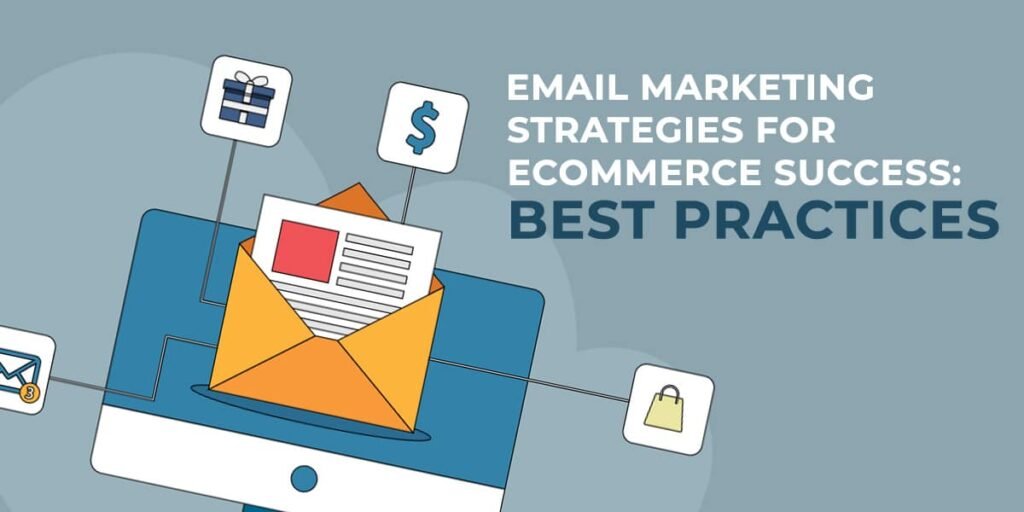
When it comes to effective ecommerce email marketing, quality always beats quantity. This Ecommerce Email Marketing Guide: Drive Sales & Maximize ROI emphasizes key best practices:
- Personalize beyond first names
- Focus on clarity over cleverness
- Use social proof to build trust
- Optimize for dark mode and mobile
- Stay compliant with GDPR and CAN-SPAM
- Test, analyze, and refine continuously
Great email marketing isn’t about sending more emails — it’s about sending better ones. Following this Ecommerce Email Marketing Guide: Drive Sales & Maximize ROI ensures your campaigns are strategic, engaging, and ROI-driven.
Ecommerce Email Marketing Benchmarks

While results vary by industry, this Ecommerce Email Marketing Guide: Drive Sales & Maximize ROI provides healthy benchmarks for ecommerce email campaigns:
- Open rate: 25–35% (B2C)
- CTR: 2–5%
- Unsubscribe rate: Under 0.5%
- Bounce rate: Below 2%
- Revenue per email: $0.10–$0.25 (higher for automated flows)
Automated and personalized emails typically outperform bulk campaigns by a wide margin, making them essential for any ecommerce strategy outlined in this Ecommerce Email Marketing Guide: Drive Sales & Maximize ROI.