

The world of e-commerce is on the brink of its most revolutionary transformation yet. Imagine a future where you don’t have to browse endless product pages, compare prices, or remember to reorder everyday essentials. Instead, intelligent AI agents handle all of it for you — from discovery to checkout. This is the promise of agentic commerce, a new frontier in digital shopping that is changing the way consumers interact with marketplaces.
Unlike traditional AI assistants that simply recommend products, agentic commerce platforms complete transactions autonomously, acting as your digital shopping proxy. From comparing prices to managing subscriptions, these AI agents are turning the once passive experience of online shopping into a fully automated, seamless process.
What is Agentic Commerce?

Agentic commerce refers to a class of AI-driven systems that don’t just suggest products but actively transact on behalf of users. While conventional e-commerce AI focuses on personalization and recommendations — “you might like this” — agentic commerce shifts the paradigm to “I will handle this for you.”
The core capabilities of agentic commerce include:
- Price Comparison Across Marketplaces
AI agents can automatically search multiple platforms, identify the best deals, and present users with optimal purchasing options without any manual effort. - Automatic Coupon Application
Gone are the days of hunting for promo codes. Agentic AI can identify applicable discounts and ensure that users get the best possible price at checkout. - Secure Checkout
Beyond selecting products, these agents complete transactions, handle payment securely, and even manage complex processes like billing, shipping, and address verification. - Subscription and Essentials Management
From reordering groceries to managing recurring product subscriptions, AI agents ensure you never run out of essentials. - Autonomous Reordering
Smart AI can track usage patterns and reorder items proactively, keeping households stocked with minimal intervention.
This represents a fundamental shift in consumer behavior — moving from a world where people “search and scroll” to one where they simply “instruct and transact.”
The Technology Behind Agentic Commerce
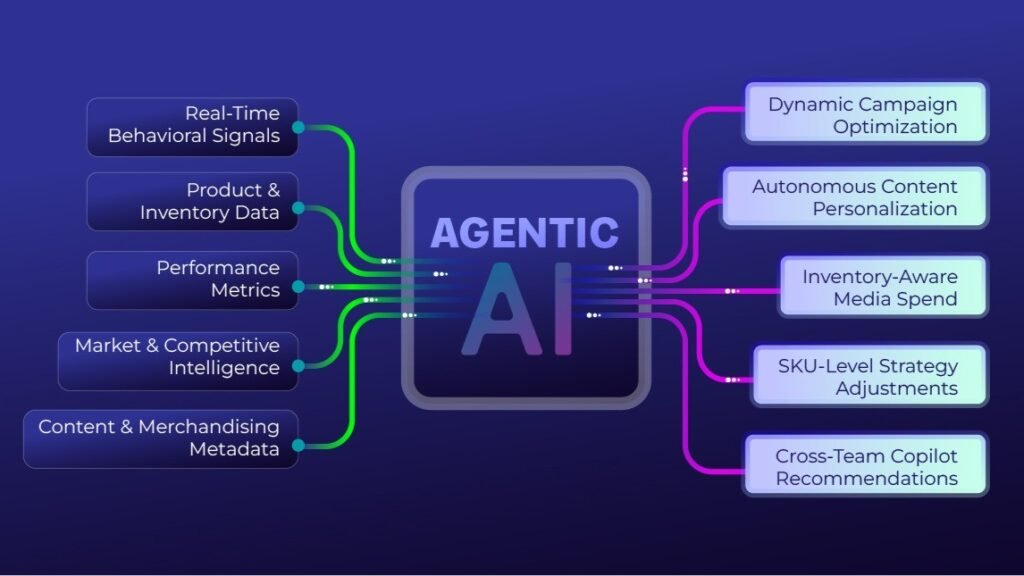
Agentic commerce relies on the integration of several advanced technologies:
- Artificial Intelligence and Machine Learning: The backbone of agentic commerce, AI algorithms predict user preferences, optimize deals, and make autonomous purchase decisions.
- Natural Language Processing (NLP): Enables users to interact with AI agents in natural language — whether through text or voice commands — making instructions intuitive and accessible.
- Secure Digital Payments: Integration with secure payment platforms ensures that autonomous transactions are safe, protecting sensitive financial information.
- API Integrations Across Marketplaces: AI agents connect with multiple e-commerce platforms and payment gateways to execute purchases seamlessly.
- Behavioral Analytics: Continuous learning from user behavior allows the AI to adapt, optimize, and anticipate user needs over time.
Global Examples of Agentic Commerce

Several leading companies are already experimenting with agentic commerce:
- Mastercard: The financial services giant is piloting AI agents that assist users with payments, apply discounts, and optimize spending across platforms.
- Google: Google is exploring AI systems capable of handling complex shopping tasks, including subscription management and automated checkout, leveraging its vast data ecosystem.
- Retail Startups: Several emerging startups are developing AI-powered shopping assistants designed to autonomously handle reordering, deal hunting, and personalized shopping.
These initiatives highlight how the technology is evolving from concept to real-world application, with the potential to reshape entire industries.
Why Agentic Commerce is a Game-Changer

The shift to agentic commerce is more than a technological trend; it represents a paradigm shift in consumer behavior and business models:
- Time-Saving for Consumers
By automating the shopping process, users save hours previously spent browsing, comparing, and completing purchases. - Enhanced Personalization
AI agents learn from previous purchases, preferences, and lifestyle patterns, making recommendations and purchase decisions that feel hyper-personalized. - Optimized Spending
With automated price comparisons and coupon applications, consumers can consistently secure the best deals without manual effort. - Reduced Cognitive Load
Shopping, often an overwhelming task with countless choices, becomes effortless when AI agents handle decisions on behalf of users. - Continuous Engagement
AI agents can proactively reorder essentials, remind users of subscriptions, and even suggest new products aligned with their tastes.
This level of convenience and personalization could fundamentally redefine loyalty, purchasing habits, and brand engagement.
Challenges and Considerations

Despite its promise, agentic commerce comes with several challenges:
1. Trust and Security
For AI agents to transact autonomously, users must trust the technology with their financial information. Security breaches or errors in transactions could severely impact adoption.
2. Consumer Control
Some users may resist handing over complete control to AI, preferring to make final decisions on purchases. Balancing autonomy with user oversight will be critical.
3. Technical Complexity
Integrating AI across multiple marketplaces, payment systems, and subscription services requires robust technical infrastructure and sophisticated algorithms.
4. Regulatory and Ethical Concerns
Questions around data privacy, consumer protection, and ethical AI use are emerging. Regulatory frameworks will need to evolve to govern autonomous AI commerce responsibly.
5. Vendor Integration
Not all marketplaces support seamless API integration or real-time inventory updates, which can limit the AI agent’s ability to execute transactions efficiently.
The Impact on Traditional E-Commerce
Agentic commerce has the potential to disrupt traditional e-commerce models significantly:
- From Search to Instruction: Instead of searching for products, users issue simple commands. For example, “Reorder my coffee beans for next month,” and the AI handles the rest.
- Reduced Need for Ads: Personalized AI agents could minimize the effectiveness of conventional digital marketing, as users increasingly rely on AI decisions rather than exploring products manually.
- Shift in Brand Strategy: Brands may need to optimize for AI agents rather than human shoppers directly. This includes transparent pricing, subscription-friendly models, and ensuring AI-friendly product data.
Consumer Behavior in the Age of Agentic Commerce

The rise of agentic commerce will transform consumer expectations and shopping behaviors:
- Higher Expectation for Personalization: Shoppers will expect AI agents to remember preferences and make intelligent purchase decisions autonomously.
- Seamless Experience Across Channels: Consumers will demand AI agents that operate across multiple marketplaces, apps, and payment methods without friction.
- Subscription-Driven Consumption: As AI agents manage essentials and recurring purchases, subscription models are likely to see higher adoption.
- Trust in AI Recommendations: The line between human decision-making and machine-driven choices will blur, with trust becoming the key determinant of AI adoption.
Future Outlook of Agentic Commerce
The future of agentic commerce is promising, with potential innovations that could further revolutionize shopping:
- Integration with Smart Homes
Imagine a refrigerator that communicates with an AI agent to automatically reorder milk, eggs, and groceries before you run out. - Cross-Border Agentic Shopping
AI agents could navigate international marketplaces, calculate taxes, shipping, and customs duties, and complete purchases globally on behalf of users. - Predictive Shopping
AI agents may anticipate needs before users realize them, based on consumption patterns, seasonal trends, and lifestyle data. - Voice-Activated Commerce
With voice assistants becoming ubiquitous, future agentic commerce could be entirely voice-driven, allowing users to shop hands-free. - Autonomous Budget Management
AI agents could optimize spending across multiple products and subscriptions, managing household budgets intelligently while maximizing savings.
“What Is Agentic Commerce?” — IBM’s official explanation of the concept
https://www.ibm.com/think/topics/agentic-commerce