
For years, Amazon was seen as the company that disrupted traditional retail. It built its empire by moving shopping from physical stores to digital platforms, making home delivery the new norm. Walmart, on the other hand, remained the symbol of massive physical retail, with thousands of stores across the United States. But the retail landscape is shifting once again. Now, Amazon is stepping deeper into the world of physical grocery stores—territory that has long been dominated by Walmart.
Recent developments show that Amazon is not just experimenting with brick-and-mortar retail. Instead, it appears to be building a more serious, long-term strategy to compete with Walmart, Target, and Costco in the physical store space. The company’s latest move—a large-format mega-store outside Chicago—signals a new phase in the competition between the two retail giants.
Amazon’s Changing Retail Strategy
Amazon’s growth story has always been tied to e-commerce. Its online marketplace transformed how people shop, and its logistics network set new standards for delivery speed and convenience. However, the company has also spent years trying to figure out how physical retail can complement its online operations.
Amazon’s physical retail journey began with the launch of its Amazon Go stores in 2016. These small, high-tech outlets used cashier-less technology, allowing customers to walk in, pick up items, and leave without stopping at a checkout counter. The idea was to create a futuristic shopping experience that could redefine convenience.
In 2017, Amazon made an even bigger move by acquiring Whole Foods Market for $13.7 billion. This purchase gave Amazon an instant presence in the grocery business, along with hundreds of physical store locations across the United States. It also provided a way to connect its online grocery service with real-world distribution points.
Later, in 2020, Amazon launched its Amazon Fresh grocery stores, aiming to create a more affordable and mainstream grocery option compared to the premium-priced Whole Foods chain. At the time, it seemed like Amazon was building a multi-brand, multi-format physical retail network.
But the strategy didn’t fully deliver the results the company hoped for.
Store Closures Signal a Strategic Shift
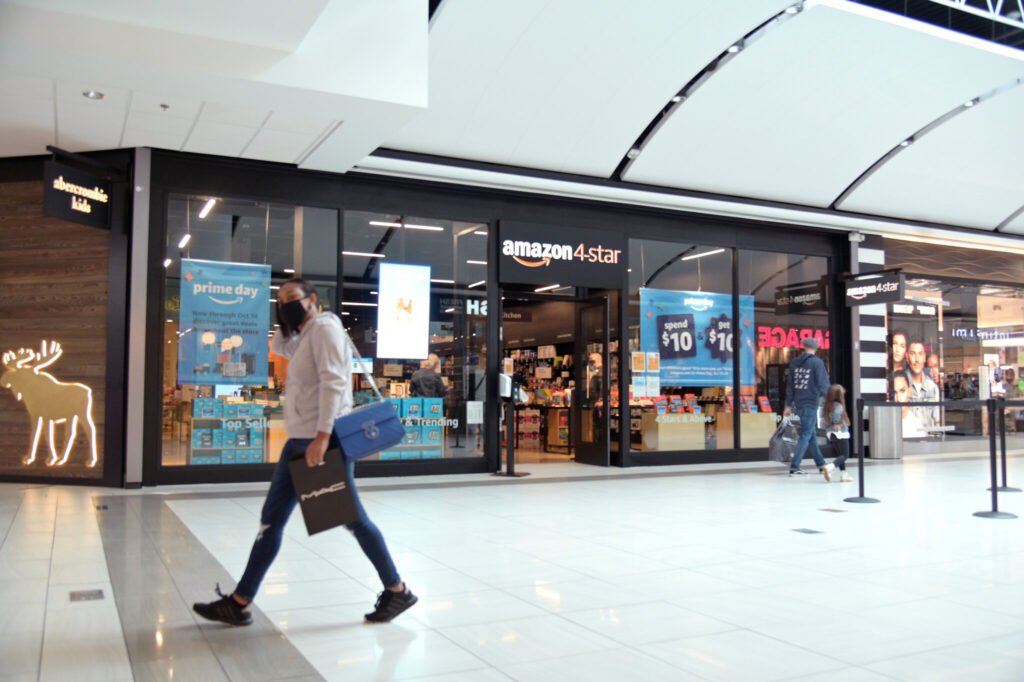
Earlier this year, Amazon announced it would close all of its Amazon Fresh and Amazon Go locations and convert some of them into Whole Foods stores. The decision marked a significant shift in the company’s physical retail approach.
According to Amazon, the earlier store formats did not create a distinctive enough shopping experience to justify large-scale expansion. Instead of continuing with multiple concepts, the company appears to be consolidating its efforts around the Whole Foods brand and a new type of mega-store.
This move reflects a broader reality: running physical stores is very different from running an online marketplace. Traditional retailers like Walmart have decades of experience in store operations, supply chains, and inventory management. For Amazon, building that expertise takes time—and significant investment.
The New Mega-Store Concept
Amazon’s latest experiment is a massive 225,000-square-foot store planned outside Chicago. This will be the company’s first location of this size, and it is designed to compete directly with large-format retailers like Walmart, Target, and Costco.
The mega-store will offer a wide range of products, including:
- Fresh produce
- Household essentials
- General merchandise
- Everyday consumer goods
But it won’t just function as a traditional store. The location will also act as a distribution center for same-day deliveries, blending retail and logistics in one space.
This hybrid approach highlights Amazon’s key advantage: its logistics expertise. By combining physical shopping with fulfillment operations, the company aims to improve delivery speeds while also attracting customers who prefer in-store purchases.
Why Grocery Matters So Much
Grocery may not seem like the most glamorous part of retail, but it is one of the most important. Grocery items are purchased frequently, which means customers return regularly. That creates opportunities to build long-term relationships and increase overall spending.
Industry analysts often refer to grocery shoppers as having a high “customer lifetime value.” In simple terms, someone who buys groceries from a retailer is more likely to:
- Shop frequently
- Subscribe to membership programs
- Purchase other products from the same retailer
This is why both Amazon and Walmart are heavily investing in grocery operations. Winning in grocery often means winning the broader retail battle.
Amazon’s Financial Outlook
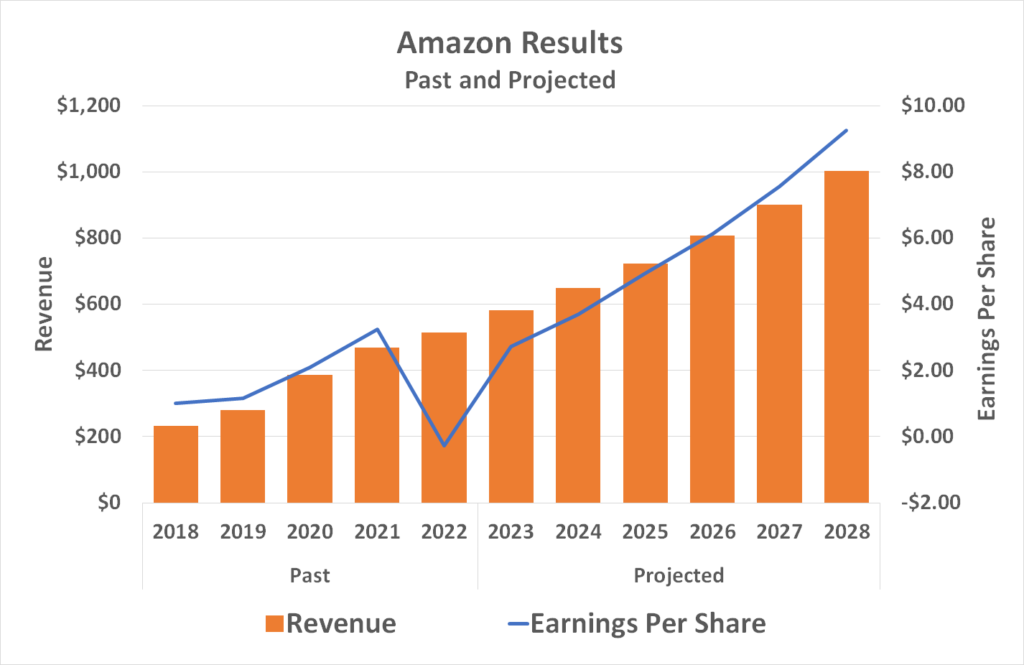
Despite its push into physical stores, Amazon remains primarily an online and technology-driven company. Its cloud computing division, Amazon Web Services (AWS), continues to be one of its fastest-growing and most profitable segments.
Still, retail remains a core part of the business. Analysts expect Amazon’s fourth-quarter physical store revenue—which includes sales from Whole Foods, Amazon Fresh, and Amazon Go—to rise by about 5.4% year over year, reaching approximately $5.9 billion.
While that number is significant, it is still small compared to the company’s overall revenue. Amazon’s online and physical store sales combined were nearly $80 billion in a recent quarter.
Walmart’s Powerful Advantage
If Amazon is trying to strengthen its physical retail presence, Walmart already has a massive head start. The company operates around 4,600 stores across the United States, creating a powerful network for both in-store shopping and online order fulfillment.
One of Walmart’s biggest strengths is its proximity to customers. The company says that 90% of the U.S. population lives within 10 miles of a Walmart store. This gives it a major advantage in last-mile delivery—the final step of getting products into customers’ hands.
Instead of shipping items from distant warehouses, Walmart can use its local stores to:
- Prepare online orders
- Offer curbside pickup
- Provide same-day delivery
This approach reduces delivery costs and speeds up service, making it difficult for competitors to match.
The Rise of Walmart+
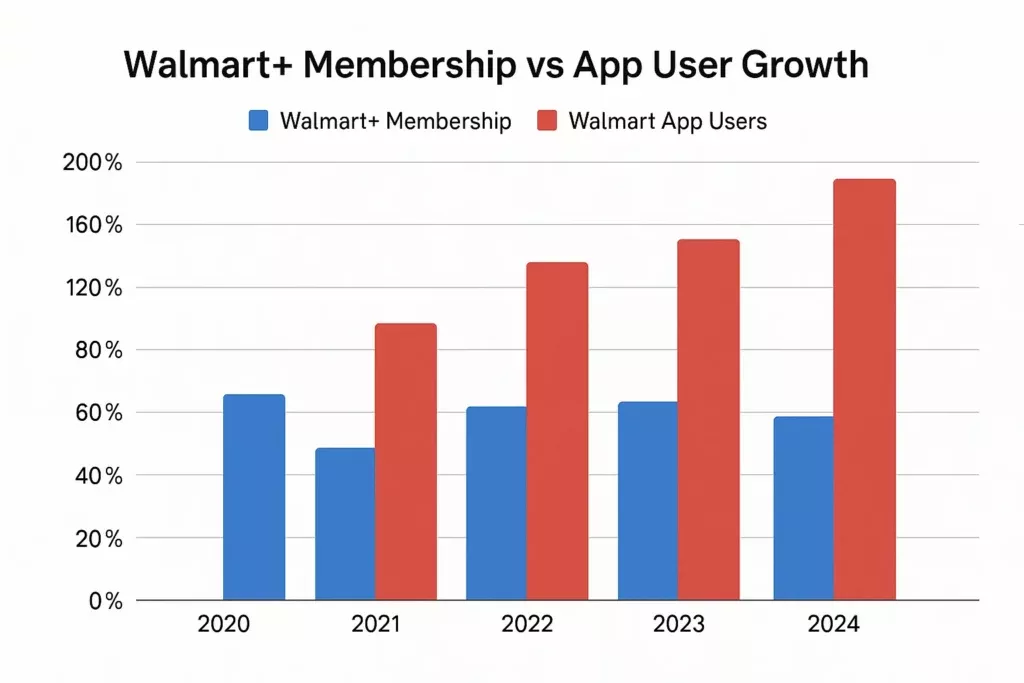
Walmart’s digital transformation accelerated with the launch of its Walmart+ membership program in September 2020. The service offers benefits such as free delivery, fuel discounts, and other perks, similar to Amazon Prime.
By 2025, Walmart+ had around 26.5 million members, according to industry estimates. The program has played a major role in boosting the company’s e-commerce performance.
In its most recent quarter, Walmart’s e-commerce sales grew by 28% compared to the same period a year earlier. This shows that Walmart is no longer just a physical retail giant—it is also becoming a major online competitor.
Comparing the Retail Giants
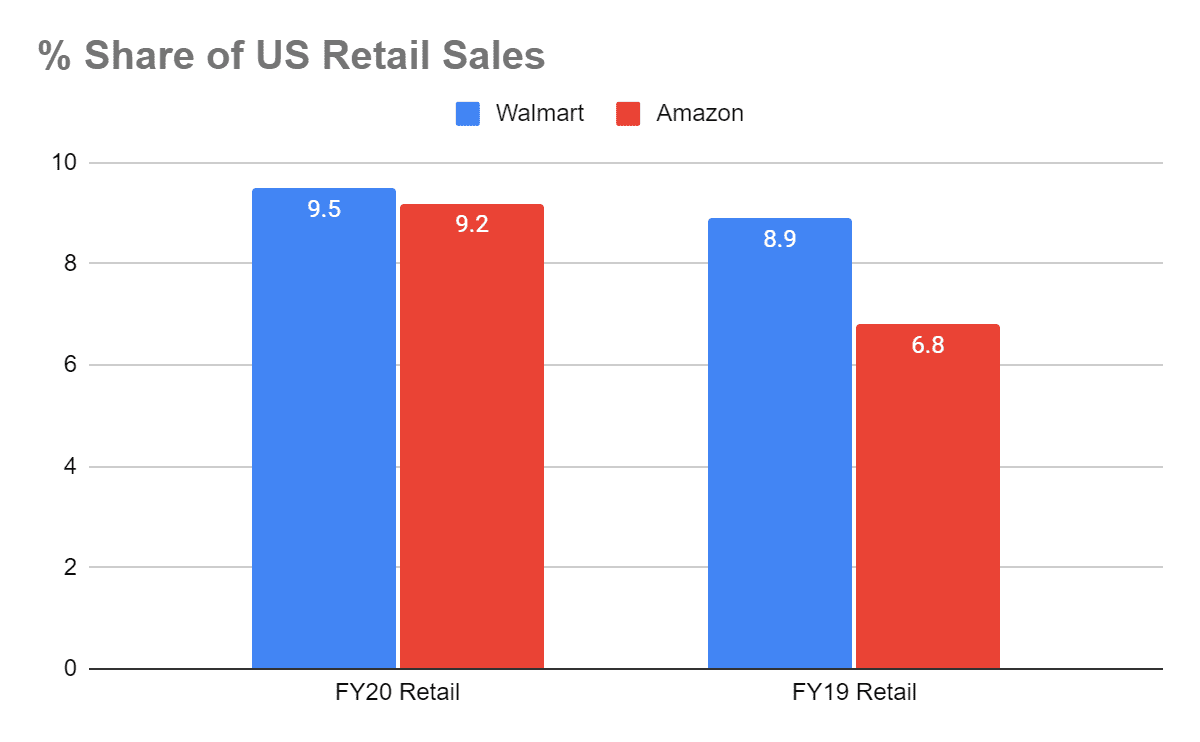
The difference in scale between the two companies remains significant. In one recent quarter:
- Walmart reported $177.8 billion in retail sales.
- Amazon reported nearly $80 billion in combined online and physical store sales.
While Amazon dominates in e-commerce and cloud computing, Walmart still leads in overall retail sales, thanks largely to its physical store network.
The Battle for Last-Mile Delivery
One of the most important aspects of modern retail is last-mile delivery. This is often the most expensive part of the logistics process, especially for low-margin products like groceries.
Walmart’s store network gives it a natural advantage. By using its physical locations as mini-fulfillment centers, the company can deliver orders quickly and at lower cost.
Amazon, on the other hand, has traditionally relied on centralized warehouses and distribution centers. While this system works well for many products, it can be less efficient for groceries and everyday essentials that customers need quickly.
That is one reason Amazon is investing more in physical stores. By building locations that serve both as retail spaces and delivery hubs, the company hopes to reduce last-mile costs and compete more effectively with Walmart.
In 2025 alone, Amazon said it delivered 4 billion groceries and everyday items to U.S. customers in the same or next day. This shows how central grocery has become to its logistics strategy.
Challenges in Brick-and-Mortar Retail
Despite its technological expertise, Amazon faces several challenges in physical retail:
1. Operational Complexity
Running a physical store involves inventory management, staffing, store layouts, and customer service—areas where traditional retailers have decades of experience.
2. Thin Margins
Grocery retail typically operates on very low profit margins. This makes it harder to justify expensive innovations or large-scale store expansions.
3. Customer Expectations
Shoppers often choose grocery stores based on convenience, price, and familiarity. Building brand loyalty in this space takes time.
Some analysts believe that going “all-in” on physical stores may not be Amazon’s long-term strategy. Instead, the company may focus on hybrid models that combine online convenience with targeted physical locations.
Whole Foods as the Core Brand
Among Amazon’s physical store formats, Whole Foods appears to be the one that will continue playing a central role. The brand already has a strong reputation, loyal customers, and established operations.
By converting some Amazon Fresh and Go locations into Whole Foods stores, Amazon is simplifying its physical retail strategy. Instead of juggling multiple concepts, it can focus on strengthening one core brand.
This approach may help the company build a clearer identity in the grocery market.
The Future of the Amazon-Walmart Rivalry
The competition between Amazon and Walmart is no longer just about online versus offline. Both companies are now pursuing hybrid strategies that combine digital platforms with physical stores.
Amazon is moving deeper into brick-and-mortar retail, while Walmart continues to expand its e-commerce capabilities. Each company is borrowing elements from the other’s playbook.
Key areas of competition include:
- Grocery delivery
- Membership programs
- Same-day fulfillment
- Physical store networks
- Technology integration
As both companies invest heavily in these areas, the line between online and offline retail is becoming increasingly blurred.
What This Means for Consumers
For shoppers, the rivalry between Amazon and Walmart is likely to bring several benefits:
Faster Delivery
Both companies are racing to offer same-day or next-day delivery for everyday items.
Lower Prices
Competition often leads to better pricing, especially in the grocery category.
More Convenience
Hybrid shopping models—where customers can order online and pick up in store—are becoming more common.
Improved Technology
From cashier-less stores to advanced delivery systems, innovation is shaping the future of retail.
For more details Amazon’s physical grocery push deepens its fight against rival Walmart