

E-commerce has become one of the most dynamic sectors in the global economy, reshaping how people shop, how businesses sell, and how technology influences commerce. From small home-based stores to large multinational retailers, understanding emerging e-commerce trends has become essential for staying competitive. As we move into 2026, the landscape is evolving rapidly, influenced by technological innovations, changing consumer expectations, and a growing emphasis on sustainability and ethical practices.
This article explores the key e-commerce trends shaping the industry in 2026 and beyond, examines why they matter, and offers guidance for businesses looking to capitalize on these shifts.
Understanding E-Commerce Trends
A trend is more than a passing fad—it is a gradual, significant shift that influences behavior, markets, and strategies. In e-commerce, trends encompass changes in consumer preferences, technology adoption, payment systems, and social awareness, among others. Companies that can identify and leverage these trends early often gain a competitive advantage, positioning themselves for long-term growth.
For example, the COVID-19 pandemic accelerated the shift from brick-and-mortar to online shopping, forcing businesses to adopt e-commerce models quickly. Those that embraced digital channels early were able to maintain sales and even grow in challenging market conditions.
E-commerce trends serve as a roadmap for businesses. They help answer critical questions:
- What technologies should we adopt?
- How can we improve customer experience?
- Which payment methods or business models are gaining traction?
- What ethical considerations do our customers care about?
Understanding these factors allows companies to align strategy with consumer behavior, optimize resources, and drive sustainable growth.
The Current E-Commerce Market Landscape
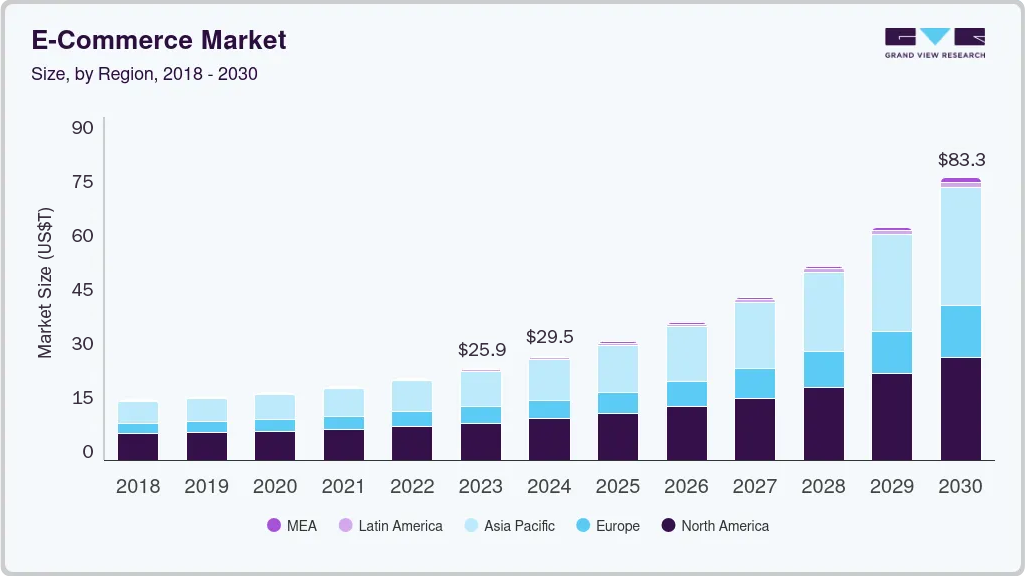
The e-commerce sector continues to expand at an unprecedented pace. In the United States alone, annual e-commerce revenue reached $1,036,482 million in 2024, with monthly revenues in October 2025 hitting $104,194 million, representing a 15–20% growth compared to the previous month. Globally, the business-to-business (B2B) e-commerce market is projected to grow at a CAGR of 14.5% through 2026, highlighting the scale and opportunity in online commerce.
The growth is not just a reflection of consumer demand but also of how businesses are increasingly relying on digital channels to reach their audiences. Online platforms have become central to sales strategies, offering scalability, reach, and analytics that physical stores cannot match.
Seven E-Commerce Trends to Watch in 2026

Based on industry observations and projections, the following seven trends are expected to shape e-commerce in 2026 and beyond. Each trend reflects both technological advancement and consumer behavior evolution, highlighting opportunities for businesses to innovate.
1. Virtual and Augmented Reality Make Shopping Immersive
Virtual reality (VR) and augmented reality (AR) are transforming e-commerce into a fully immersive experience. Initially limited to major players, these technologies are now accessible to mid-sized and smaller businesses, offering customers interactive ways to explore products before purchasing.
Key applications include:
- 360-degree product views: Shoppers can examine items from every angle.
- Virtual showrooms: Furniture and home décor can be placed digitally in a customer’s space.
- Virtual try-ons: Clothing, eyewear, and accessories can be tried on digitally, reducing the need for returns.
AR and VR not only enhance engagement but also increase consumer confidence in purchasing decisions. Customers are more likely to complete a transaction when they can see exactly how a product looks or fits, leading to fewer returns and higher satisfaction.
2. Mobile Shopping Continues to Rise
The shift from desktop to mobile shopping is well underway, and it shows no signs of slowing. Smartphones accounted for 69% of online orders worldwide in the second quarter of 2025, according to Statista.
The implications for businesses are clear:
- Mobile optimization is essential. Websites, checkout processes, and product pages must function seamlessly on phones and tablets.
- App development remains valuable. Dedicated mobile apps can improve engagement and streamline repeat purchases.
- Responsive design is critical. Customers expect smooth navigation, fast load times, and easy payment options on mobile devices.
Retailers that fail to prioritize mobile experiences risk losing sales, particularly among younger demographics who rely heavily on smartphones for browsing and shopping.
3. Payment Methods Become More Flexible and Diverse
In 2026, consumers expect fast, convenient, and diverse payment options. Traditional methods like credit and debit cards are still important, but modern shoppers increasingly prefer:
- Digital wallets (Apple Pay, Google Pay, PayPal)
- Buy Now, Pay Later (BNPL) services
- Cryptocurrency payments
- Direct bank transfers (Pay by Bank / A2A payments)
Businesses offering multiple payment channels not only improve conversion rates but also cater to customer preferences across age groups, income levels, and geographic locations. Flexible payments, including instalments and digital wallets, can reduce cart abandonment and increase overall revenue.
4. Voice Search is Transforming How Consumers Shop
Voice search is no longer a novelty—it is a rapidly growing method for online shopping. Smart speakers like Google Home and Amazon Alexa allow users to browse, compare, and order products hands-free.
The global voice and speech recognition market is expected to reach $53.67 billion by 2030, indicating significant adoption. Voice shopping offers benefits such as:
- Convenience for multitasking consumers
- Faster ordering processes
- Accessibility for users with limited digital literacy
Merchants need to optimize product listings and content for voice search to remain competitive, including natural language keywords and voice-friendly product descriptions.
5. Artificial Intelligence Enhances Personalization
AI is increasingly serving as a digital personal shopper, analyzing consumer behavior to deliver tailored recommendations and offers. Through AI, businesses can:
- Predict shopping habits
- Suggest complementary products
- Customize marketing campaigns
AI collects data on customer preferences, browsing patterns, and purchase history, allowing businesses to create highly personalized shopping experiences. In 2026, AI will continue to influence product discovery, pricing strategies, inventory management, and even automated customer support.
6. Subscription Models Drive Recurring Revenue
Subscription services are becoming a mainstay in e-commerce. From clothes and cosmetics to groceries and fitness products, recurring subscriptions allow businesses to maintain predictable revenue streams while increasing customer loyalty.
Benefits of subscription models include:
- Increased customer retention
- Predictable cash flow
- Opportunities to cross-sell or upsell products
Subscription e-commerce is particularly effective for products that require regular replenishment or encourage lifestyle engagement, such as beauty boxes, meal kits, or health supplements.
7. Ethical Branding Resonates With Consumers
Consumers are increasingly conscious of the social and environmental impact of their purchases. Ethical branding—prioritizing responsible sourcing, fair labor practices, and sustainable packaging—is no longer optional.
Trends in ethical e-commerce include:
- Using local suppliers to reduce carbon footprint
- Implementing environmentally friendly packaging
- Supporting fair trade initiatives
- Donating a portion of profits to social causes
Brands that demonstrate alignment with consumers’ values can build trust, loyalty, and a competitive advantage in crowded markets. McKinsey research shows that sustainable brands outperform competitors in terms of growth and customer engagement.
How Businesses Can Start Adopting E-Commerce Trends
Adapting to e-commerce trends doesn’t have to be overwhelming. Companies can begin with small but meaningful steps tailored to their resources, industry, and customer base. Key strategies include:
- Prioritize sustainability and ethical practices
- Choose eco-friendly packaging
- Support local suppliers
- Pay workers fairly
- Donate to social causes
- Leverage technology to improve customer experience
- Implement AI for personalization
- Adopt AR/VR for product visualization
- Optimize for mobile and voice search
- Expand and diversify payment options
- Offer digital wallets, BNPL, and direct bank payments
- Provide multiple currencies and local payment methods
- Ensure smooth checkout processes
- Adopt subscription models where feasible
- Focus on repeat-purchase products
- Design flexible, transparent subscription plans
- Use AI to tailor offers and recommend add-ons
- Monitor and respond to market trends continuously
- Use analytics to track consumer behavior
- Stay informed about regulatory changes
- Adjust marketing strategies based on emerging patterns
By integrating these strategies, businesses can not only keep pace with evolving consumer expectations but also drive growth and customer loyalty in a competitive digital marketplace.
Looking Ahead: The Future of E-Commerce
E-commerce in 2026 and beyond will be defined by a combination of technology, convenience, and ethics. Emerging trends signal a shift from transactional commerce to experience-driven shopping, where personalization, engagement, and values matter as much as price and selection.
Key themes shaping the future include:
- Immersive technologies (AR/VR): Allowing customers to interact with products in realistic, engaging ways
- AI-driven personalization: Tailoring every interaction based on individual preferences
- Flexible, seamless payments: Ensuring checkout is frictionless and secure
- Sustainable, ethical branding: Building trust with socially conscious consumers
- Voice and mobile-first commerce: Optimizing experiences for convenience and accessibility
Businesses that embrace these trends early will position themselves as leaders in the evolving e-commerce ecosystem, while those that lag risk falling behind competitors in a market defined by speed, innovation, and customer-centricity.
The e-commerce landscape is no longer just about selling products online—it’s about creating meaningful, convenient, and responsible experiences for consumers at every touchpoint.
E‑commerce trends 2026: What will shape online business? — Eology: https://www.eology.net/news/e-commerce-trends