

As we move into 2026, e-commerce is poised for a transformative shift. Digital retailers and online marketplaces face a landscape that is more complex and demanding than ever. Rising consumer expectations, shrinking margins, and the rapid evolution of AI-driven commerce technology are forcing businesses to rethink how they operate, engage customers, and generate value.
The story of 2025 was about pushing the boundaries of personalization, operational efficiency, and omnichannel integration. Retailers made strides in tailoring digital experiences and streamlining backend processes, but the gap between consumer expectations and current digital experiences remains significant. In 2026, these gaps are expected to close—but not without fundamental changes in strategy, technology adoption, and platform architecture.
The Challenge: Meeting Rising Customer Expectations

Customer expectations for hyper-personalization and immersive online experiences have reached new heights. Consumers now demand experiences that rival in-store shopping, yet digital retailers still struggle to deliver confidence in purchase decisions without physical interaction.
Traditional product images and generic descriptions are no longer enough. Shoppers want:
- Dynamic, personalized recommendations
- Interactive and immersive product displays
- Seamless, instant checkout experiences
At the same time, ethical data use and stricter privacy regulations limit the ways companies can collect and apply customer information. This creates a tension between delivering personalized experiences and remaining compliant, while also keeping margins intact.
Add to this the rising costs of fast delivery, returns, and customer support, and it becomes clear why digital retail margins continue to be squeezed. In this environment, AI and platform modernization have become not just advantages, but necessities for survival.
2025 Accomplishments That Set the Stage for 2026
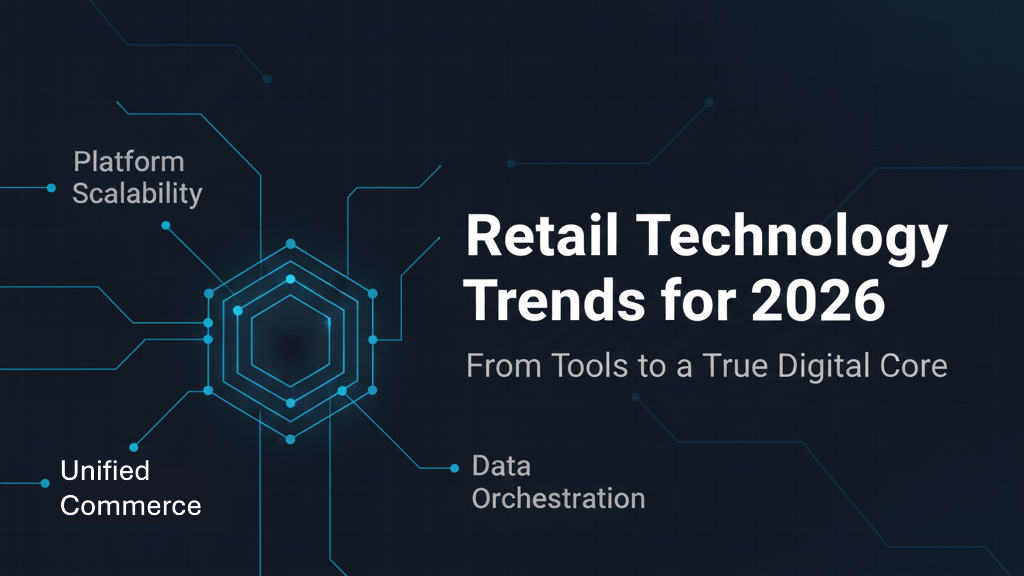
Retailers made several key advancements in 2025 that will form the foundation for next year’s strategies:
- Predictive AI for Personalization: Companies moved beyond basic demographic segmentation, employing AI to analyze real-time behavior and adjust website content, recommendations, and pricing dynamically. This approach increased average order values (AOV) and improved customer retention.
- Omnichannel Integration: Retailers increasingly integrated online and offline touchpoints, enabling a smoother shopping experience. Dynamic inventory visibility, social commerce channels, and IoT integrations began to enhance convenience for consumers while reducing operational inefficiencies.
- Headless Commerce Architecture: The shift away from rigid, monolithic platforms toward modular, “headless” systems allowed faster innovation. Retailers could introduce new AI-powered search tools, add social commerce channels, and integrate emerging technologies without overhauling their entire infrastructure.
These efforts laid the groundwork for 2026, where unified platforms, agentic AI, and smarter automation will dominate.
Unified Platforms: The Backbone of 2026 E-Commerce
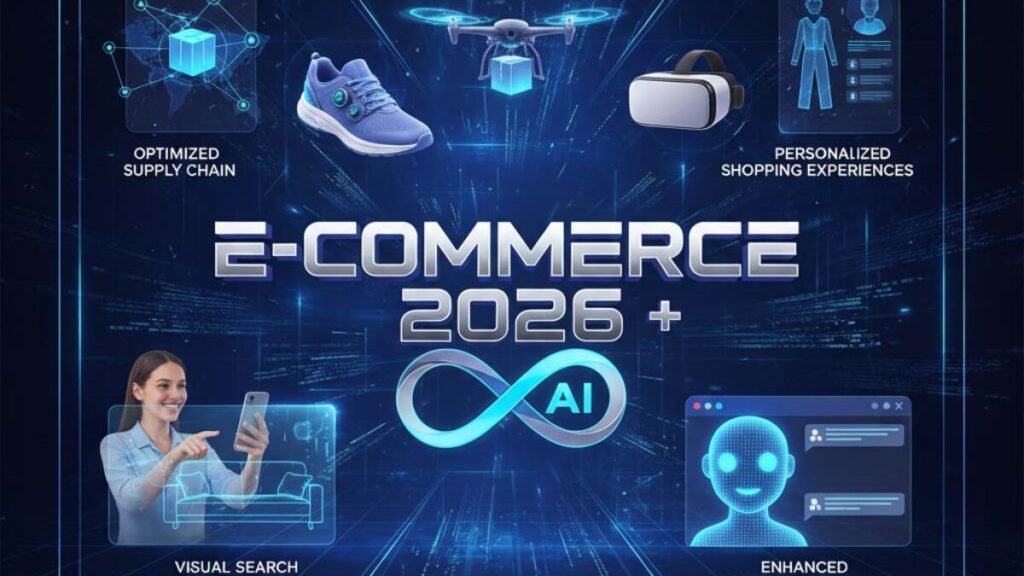
Legacy e-commerce systems often rely on a patchwork of tools, each serving a specific function—inventory management, CRM, payment processing, or fulfillment. This fragmentation increases complexity, slows innovation, and drives up costs.
According to Mariano Gomide de Faria, founder and co-CEO of Vtex, 2026 will mark a tipping point: unified platforms will become standard, not optional.
“Unified platforms will become the default digital architecture for retailers and brands in 2026. This will not be seen as innovation, but survival, since fragmented stacks cannot support the scale and flexibility modern commerce demands.”
Unified platforms consolidate core operations, inventory management, and fulfillment capabilities into a single system. Benefits include:
- Reduced operational costs through simplification
- Enhanced scalability for global expansion
- Seamless store-based fulfillment without added overhead
- Faster integration with AI-powered tools and emerging technologies
Retailers that adopt unified platforms can focus more on customer experience and less on operational firefighting.
Agentic AI: The Next Frontier in Digital Commerce
AI adoption has been accelerating for years, but agentic AI—AI that can autonomously execute tasks and make decisions—is expected to reshape commerce fundamentally in 2026. Unlike traditional AI or generative AI, agentic AI actively participates in business processes, from shopping assistance and fraud detection to payment processing and inventory management.
Valentin Vasilyev, CTO of Fingerprint, warns that companies failing to adopt agentic AI risk falling behind:
“E-commerce companies that fail to adopt foundational infrastructure for agentic commerce will either face declining conversions or be forced to accept high-risk transactions.”
By the end of 2026, agentic AI will no longer be a novelty. Customers will expect AI that adapts to human nuance—understanding tone, temperament, and individual preferences. AI will evolve from being a tool that provides information to a system that solves problems and makes decisions on behalf of the user.
AI and Relationship Intelligence
Beyond commerce, AI will become an essential tool for team collaboration and relationship management. According to Nick Blasi, co-founder of Personos, AI will help teams:
- Spot working-style mismatches
- Anticipate friction points
- Personalize communication to reduce misunderstandings
Businesses that harness AI for relationship intelligence will not only improve internal productivity but also enhance customer interactions, reducing errors and boosting satisfaction.
Payment Automation and BNPL Integration

Payments are another area ripe for AI-driven transformation. Randy Modos, co-founder of PayJunction, highlights several trends for 2026:
- Surcharging normalization: Fees for card payments, once rare, will become standard in low-margin sectors.
- Real-time reconciliation: Automation will reduce errors and manual labor in accounting processes.
- Buy Now, Pay Later (BNPL): Embedding BNPL directly into business workflows will drive adoption and flexibility.
Technologies like no-code integrations will allow retailers to select the best BNPL provider for their business without extensive development work, creating a more open and competitive payment ecosystem.
AI Factories and Multi-Agent Systems
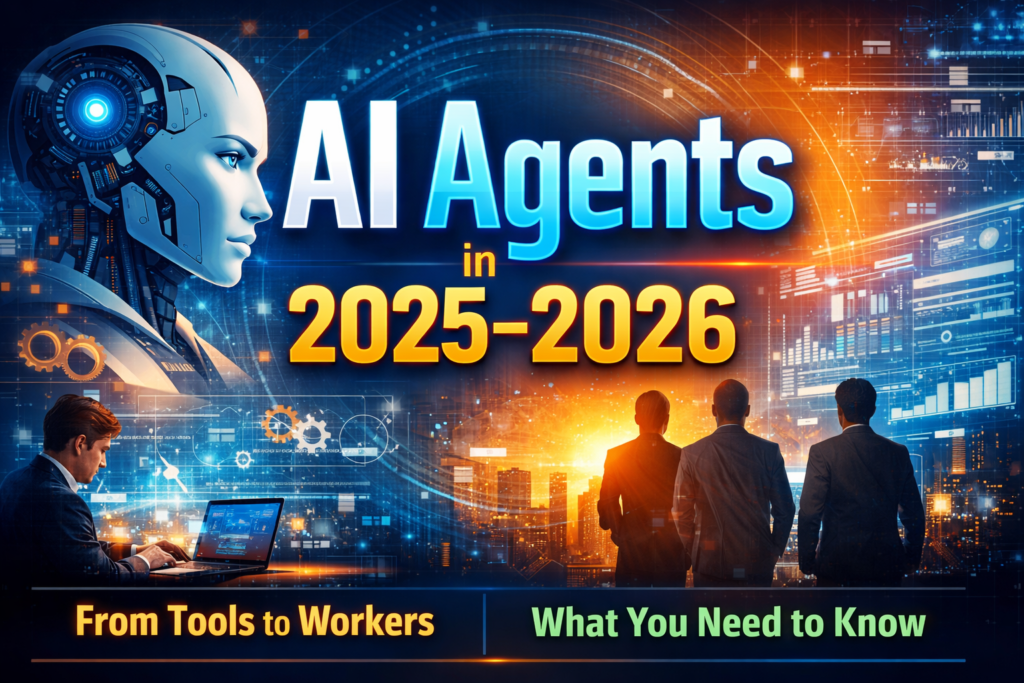
Large organizations will formalize AI operations into dedicated Agent Factories, as predicted by Joao Moura, CEO of CrewAI. These internal teams will:
- Design, test, and deploy AI agents
- Monitor AI performance at enterprise scale
- Deliver measurable ROI while maintaining operational control
This systematization allows organizations to scale AI without sacrificing reliability, trust, or compliance.
Redefining Mobile Commerce with AI
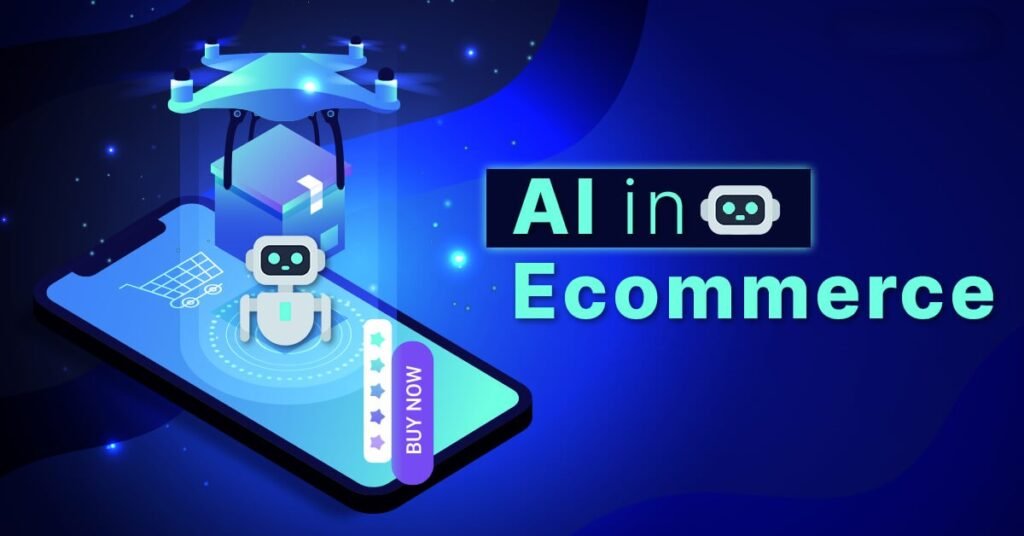
Mobile commerce is undergoing a radical shift. David Hunter, CEO of Local Falcon, explains that consumers increasingly treat AI as a personal shopping assistant, rather than just a search tool. Instead of browsing countless products, shoppers can ask AI to find exact, personalized matches instantly.
Key implications for retailers:
- Product data, reviews, pricing, and inventory must be AI-ready
- Real-time accuracy on product availability is critical
- Brands must make themselves easily discoverable and scannable for AI systems
Meanwhile, Alex Campbell, co-founder of Vibes, predicts that Rich Communication Services (RCS) will replace traditional SMS/MMS, providing app-like messaging experiences even for customers who haven’t downloaded the brand’s app.
“RCS will open up app-like experiences for consumers who don’t commit to a brand’s app, expanding communication and engagement opportunities.”
Fulfillment and Packaging Innovations

E-commerce fulfillment is also evolving. Anant Parte, executive director at Sealed Air, predicts a shift toward mailer-first packaging workflows in 2026. Drivers of this change include:
- Faster pack speeds
- Reduced packer fatigue
- Space optimization in warehouses
Automation will increasingly rely on compact, modular systems that integrate into existing pack benches. Features like auto-dispensing materials, ergonomic designs, and swing-arm mounts will become standard.
Automated bagging is expected to be one of the fastest-growing segments due to labor shortages and cycle-time pressures. Brands will increasingly demand full workflow engineering from packaging suppliers, not just materials.
The Road Ahead: What Retailers Must Do in 2026
- Adopt Unified Platforms: Consolidate inventory, operations, and omnichannel touchpoints to reduce complexity and cost.
- Leverage Agentic AI: Deploy AI that can autonomously assist customers, manage transactions, and streamline operations.
- Optimize Payment Systems: Integrate BNPL, automation, and real-time reconciliation to improve cash flow and customer experience.
- Prepare Data for AI: Ensure clean, structured, and accurate product data to be discoverable by AI agents.
- Rethink Fulfillment and Packaging: Move toward mailer-first, modular, and ergonomically optimized packaging systems.
- Invest in Mobile Experiences: Utilize RCS and AI-powered mobile interactions to meet the consumer where they are.
- Build Internal AI Capabilities: Establish dedicated teams for AI monitoring, deployment, and multi-agent workflow governance.
Why 2026 Will Be Different
The coming year will be defined not just by incremental improvements, but by structural shifts in technology and operations. Retailers that fail to unify platforms, adopt agentic AI, and modernize payments and fulfillment risk falling behind.
Those that succeed will:
- Lower total cost of ownership while scaling globally
- Strengthen omnichannel execution
- Deliver hyper-personalized experiences that rival physical stores
- Reduce friction in both customer and internal operations
- Leverage AI for decision-making, relationship intelligence, and operational efficiency
In short, 2026 will separate e-commerce leaders from laggards based on technology adoption, operational unification, and intelligent automation.
Unified Platforms and Agentic AI Will Define E-Commerce in 2026 (E‑Commerce Times)
https://www.ecommercetimes.com/story/unified-platforms-and-agentic-ai-will-define-e-commerce-in-2026-178463.html
Zomato FY25: Vertical Growth
https://smallseokit.com/blog/zomato-fy25-vertical-growth/